NDC-TIA Phase 2
〰️
Vietnam Component Kick-off
〰️
NDC-TIA Phase 2 〰️ Vietnam Component Kick-off 〰️
On July 10, the Vietnam component of the NDC Transport Initiative in Asia Phase II (NDC-TIA 2) was officially launched in Hanoi. Running from 2026 to 2028, the project is jointly implemented by GIZ and the Academy for Construction Strategy and Cadres Training (ACST) under the Ministry of Construction in Vietnam, with support from the International Council on Clean Transportation (ICCT) and technical support from World Resources Institute (WRI).
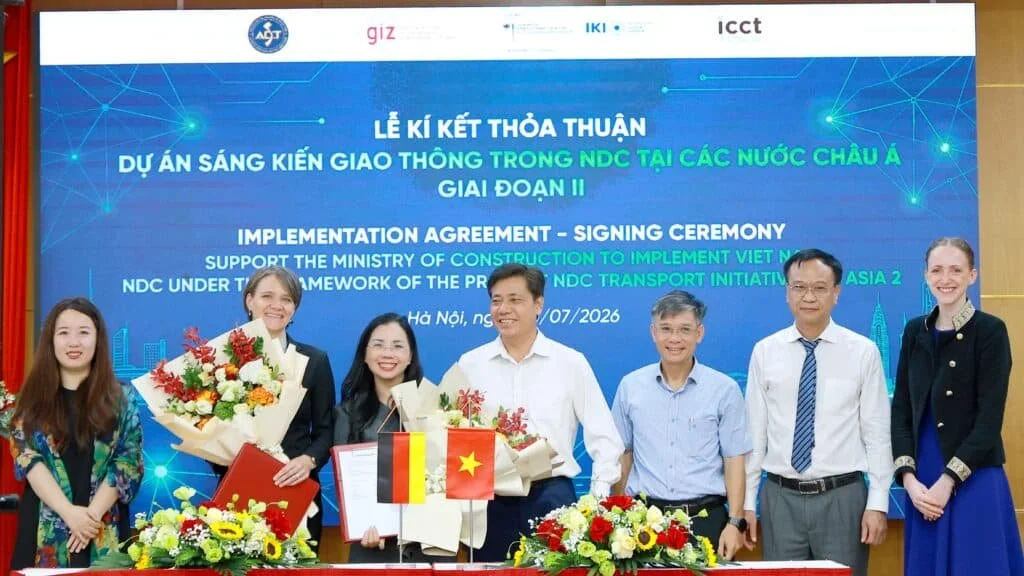
Photo provided by GIZ Vietnam.
In 2021, Vietnam’s transport sector emitted ca. 45 MtCO2 – an increase of 1.5 times compared to 2014. The transport sector is responsible for 18% of energy-related greenhouse gas (GHG) emissions and 11% to the country’s total emissions. Vietnam is committed to achieve net-zero emissions by 2050 with effective international supports. Viet Nam NDC 3.0 has been updating, taking into account of the commitment, NDC-TIA Phase 1 and relevant ones. Recognizing the critical role of decarbonizing transport sector, Vietnam aims to draw lessons from regional best practices to facilitate a smooth and fast transition to clean energy vehicles.
On July 10, the Vietnam component of the NDC Transport Initiative in Asia Phase II (NDC-TIA 2) was officially launched in Hanoi. Running from 2026 to 2028, the project is jointly implemented by GIZ and the Academy for Construction Strategy and Cadres Training (ACST) under the Ministry of Construction in Vietnam, with support from the International Council on Clean Transportation (ICCT) and technical support from World Resources Institute (WRI).
The project directly supports Vietnam’s national Green Energy Transition Action Programme to help the country achieve net-zero transport emissions by 2050. Focusing on commercial vehicle electrification and clean energy, the project will address regulatory gaps, technical standards, infrastructure and financing – key enablers for large-scale adoption.
It will support the development of regulations and standards for electric vehicles, assess urban charging needs, study links between EVs and public transport and metro systems, and propose financing mechanisms to develop the EV ecosystem. Policy dialogue and knowledge sharing will also be strengthened, including initiatives to promote women’s participation in transport and logistics.
“Decarbonising the transport sector is a global challenge that requires international collaboration and joint efforts. The NDC-TIA project provides a regional exchange and cooperation platform for China, India, and Vietnam.”

Urda is the Head of Cluster ‘Green Transformation’ at GIZ East Asia.
“The programme is one of the concrete steps to realize Vietnam’s transport-sector emission reduction commitments.”
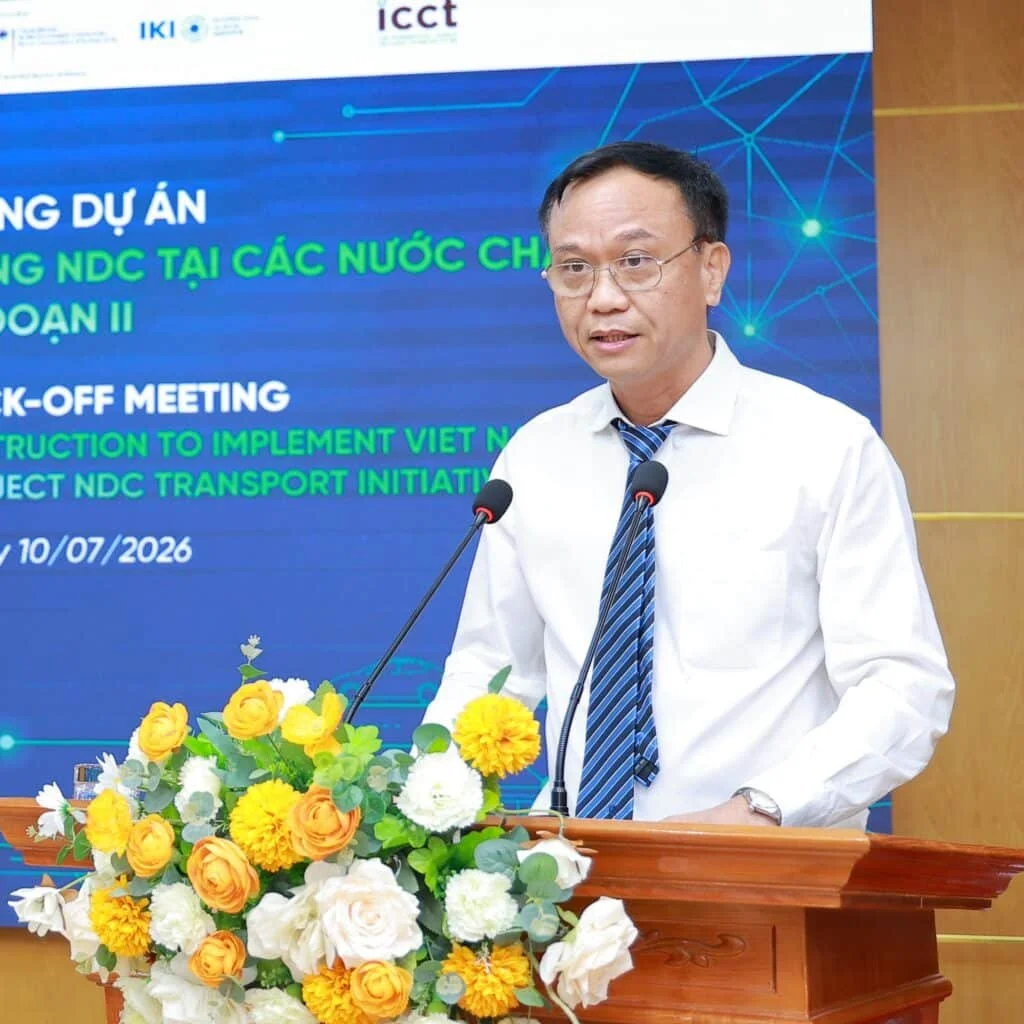
Ngô Anh Tuấn is the Director of Academy for Construction Strategy and Cadres Training (ACST) .
Alexandra Westwood, Attaché of the Section Economic Affairs and Development of German Embassy in Vietnam, said the continuation of cooperation under the NDC Transport Initiative in Asia (NDC-TIA) Phase 2 demonstrates a long-standing, trusted partnership in addressing climate change and will bring practical benefits to Vietnam’s green transition.
The launch event attracted over 100 delegates from state management agencies, enterprises across the transport ecosystem, research institutes, universities, professional associations, development partners, and industry experts, reaffirming the shared commitment of all stakeholders to advancing the green transformation in Vietnam’s transport sector.

All photos © GIZ.
Author: Changing Transport