Regional & Global Work
Increasing regional and global ambitions to decarbonize transport
Through its in-country work, the NDC-TIA will produce key lessons for stakeholders interested in decarbonizing transit. Sharing these lessons will help raise ambitions around the world.
The NDC-TIA will share knowledge at a regional and global level through events, media and publications related to designing and implementing long-term, multi-stakeholder strategies for decarbonizing transport. This knowledge sharing will both enable diverse stakeholders to make informed decisions regarding decarbonization and shift the narrative towards sustainable transport. To ensure high-level engagement, this work will be coordinated closely with regional and global organizations and events.
Key Outputs
Output 1
Publish knowledge products and a flagship report to share lessons learned about implementing ambitious, integrated transportation decarbonization strategies.
Output 2
Increase discussion around long-term, multi-stakeholder, integrated approaches to decarbonizing transportation.
Output 3
China, India and Vietnam share their experiences on the global level to support increased international commitments.
Thailand
Thailand aims for carbon neutrality by 2050 and net-zero greenhouse gas emissions by 2065. NDC-TIA supports the Ministry of Transport’s Office of Transport and Traffic Policy and Planning in improving emissions and mitigation modelling as well as scenario development for updating and aligning action plans with carbon neutrality goals.
Strategic Partner
Office of Transport and Traffic Policy and Planning, Ministry of Transport
The Phillippines
The Philippines have yet to set a net-zero target. NDC-TIA works with the Department of Transportation and local partner institutions to align objectives and develop a stakeholder dialogue on long-term transport decarbonization strategies.
Strategic Partner
Department of Transportation
Resources
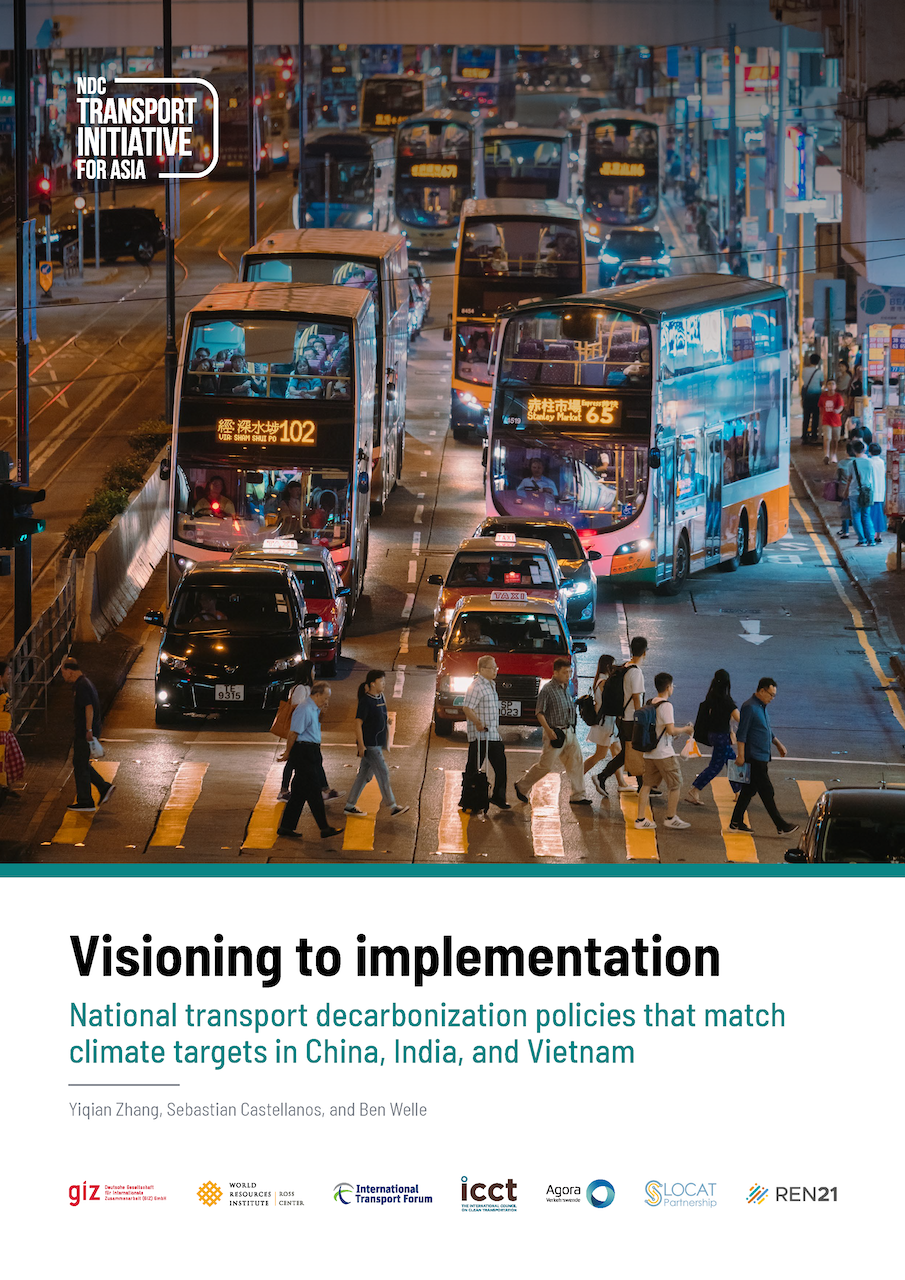
This new report assesses how China, India and Vietnam are translating their international climate ambition into national climate change-related transport strategies and policies.
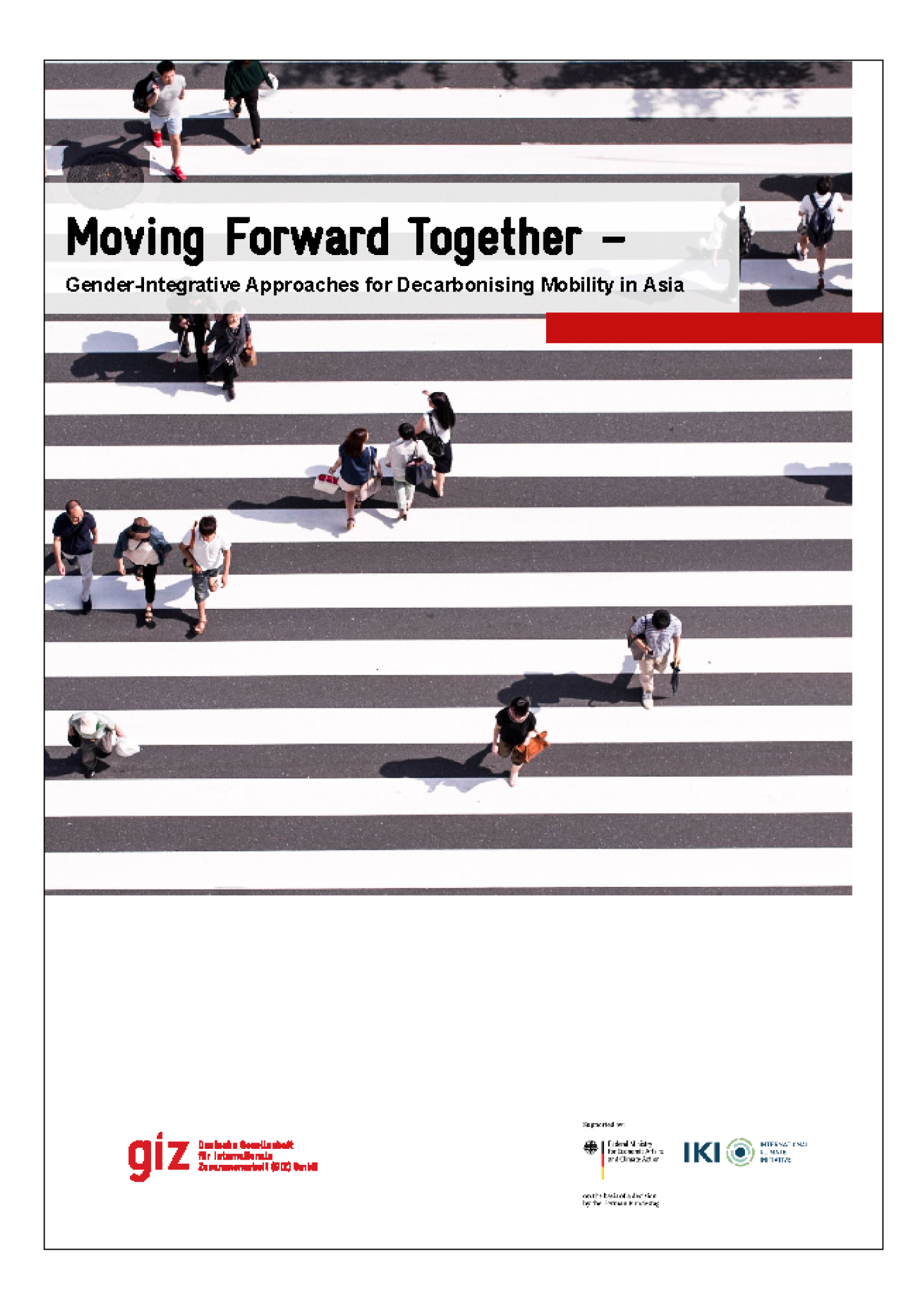
This paper explores the role which women and gender-specific mobility behaviour play in the decarbonisation of the transport sector in Asia, based on a comparative analysis of inclusive low-carbon transport, related challenges and gender-integrative solutions in China, India and Vietnam.
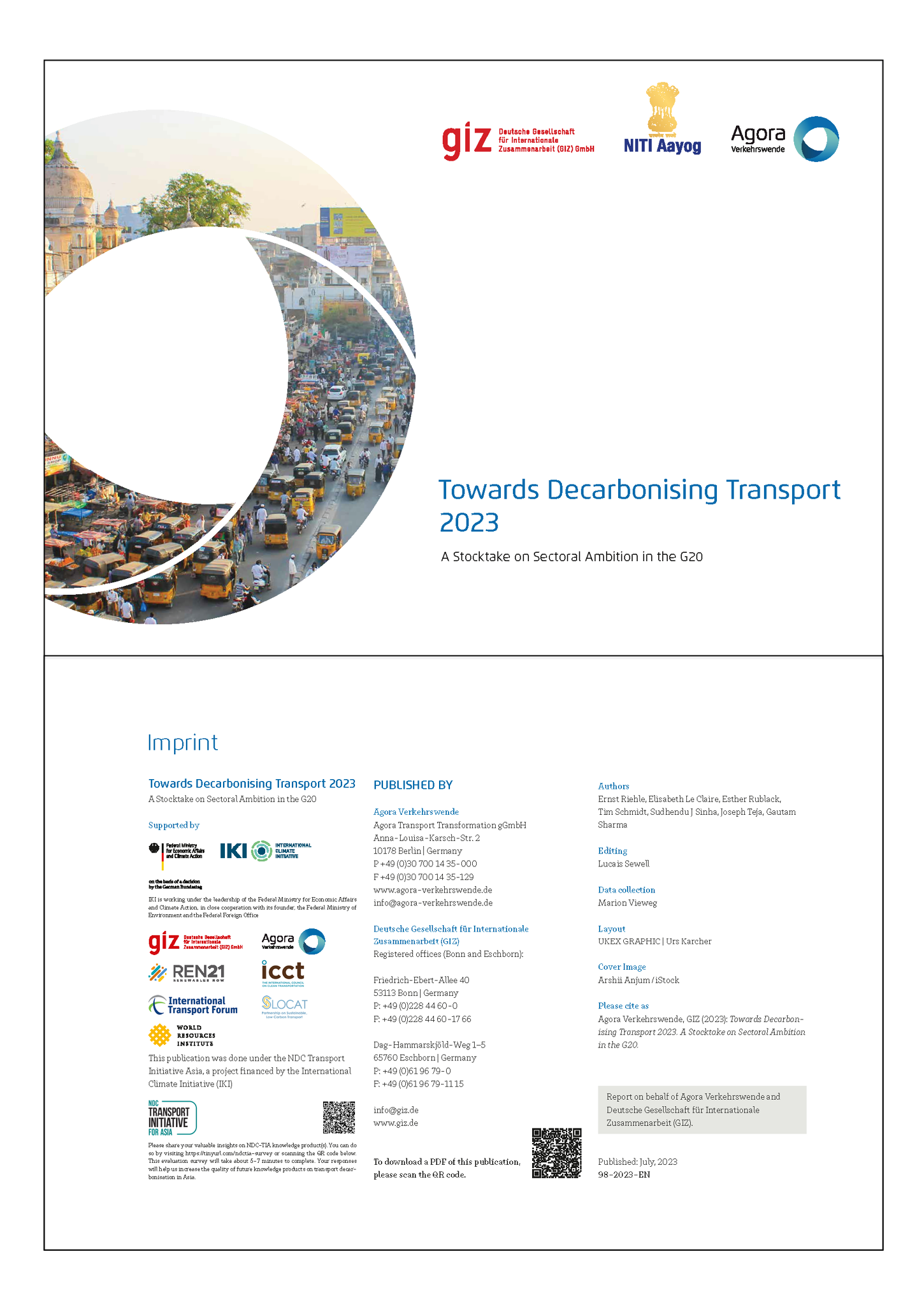
This publication analyses the current state of decarbonisation and climate ambition in the transport sectors of G20 countries.
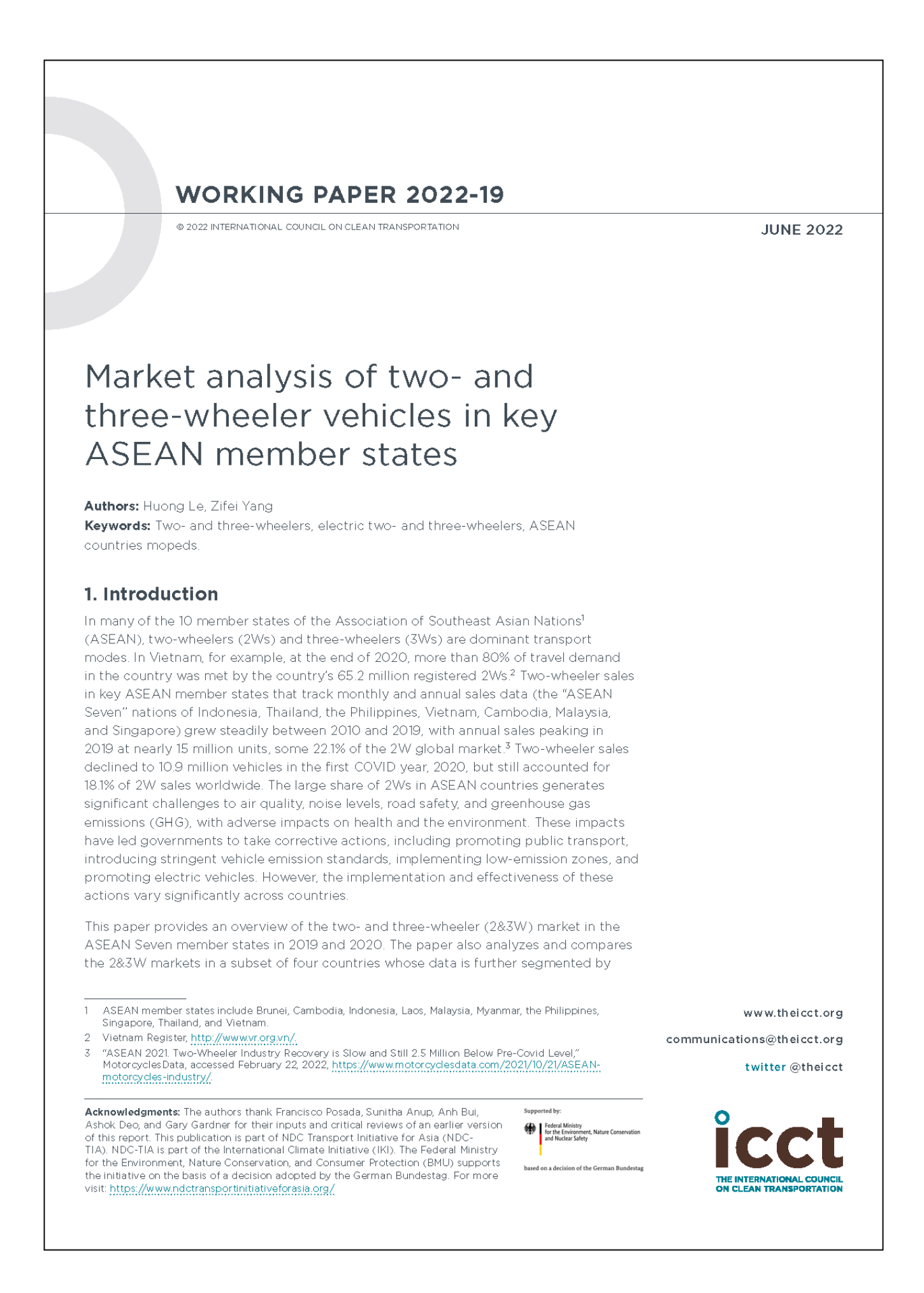
This paper presents a profile of the two- and three-wheeler (2&3W) market in seven ASEAN member states and could be used to support future policy development in mitigating the negative environmental impacts of 2&3Ws.
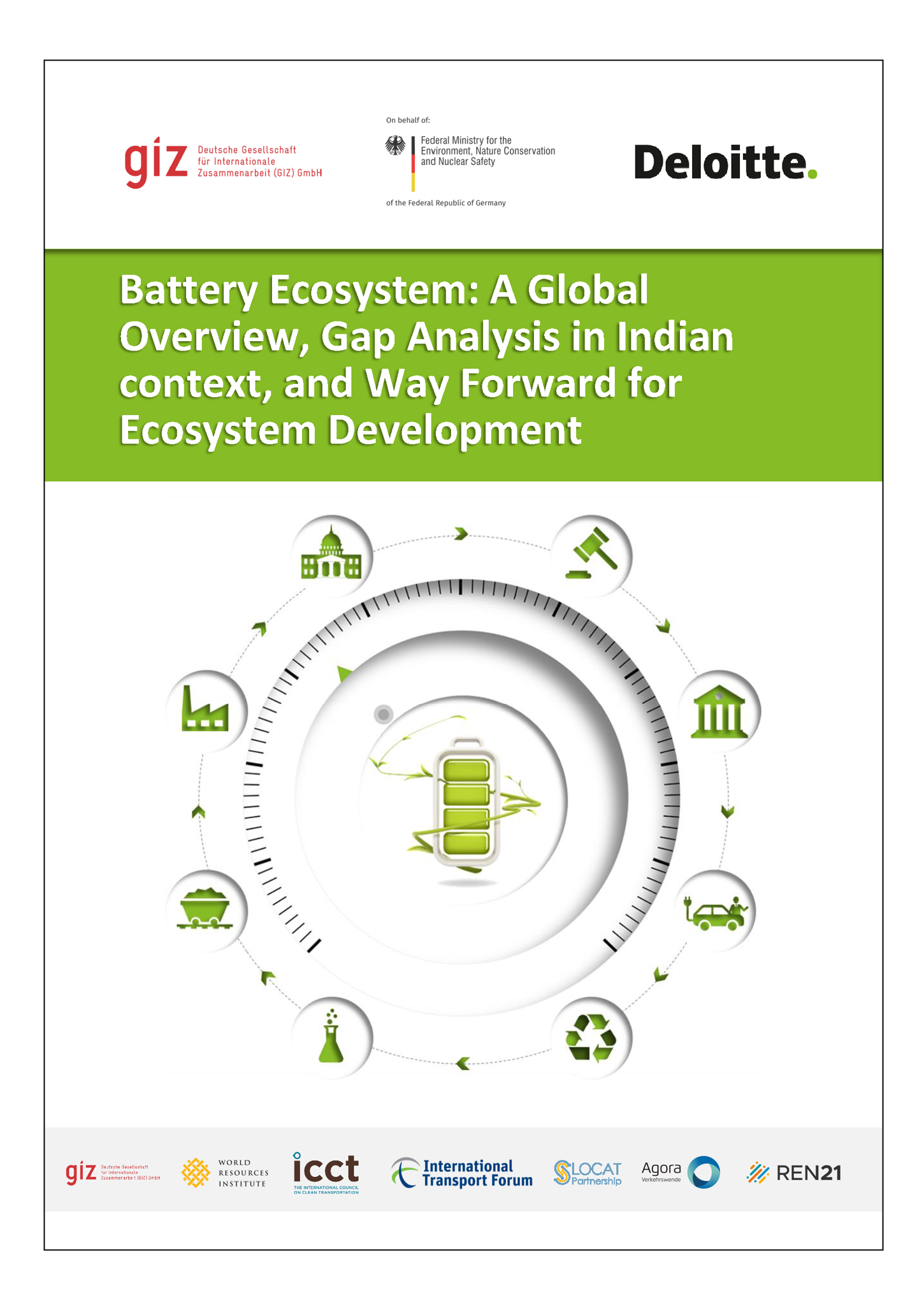
This report investigates the complete value chain of motive/traction batteries used in electric vehicle applications.
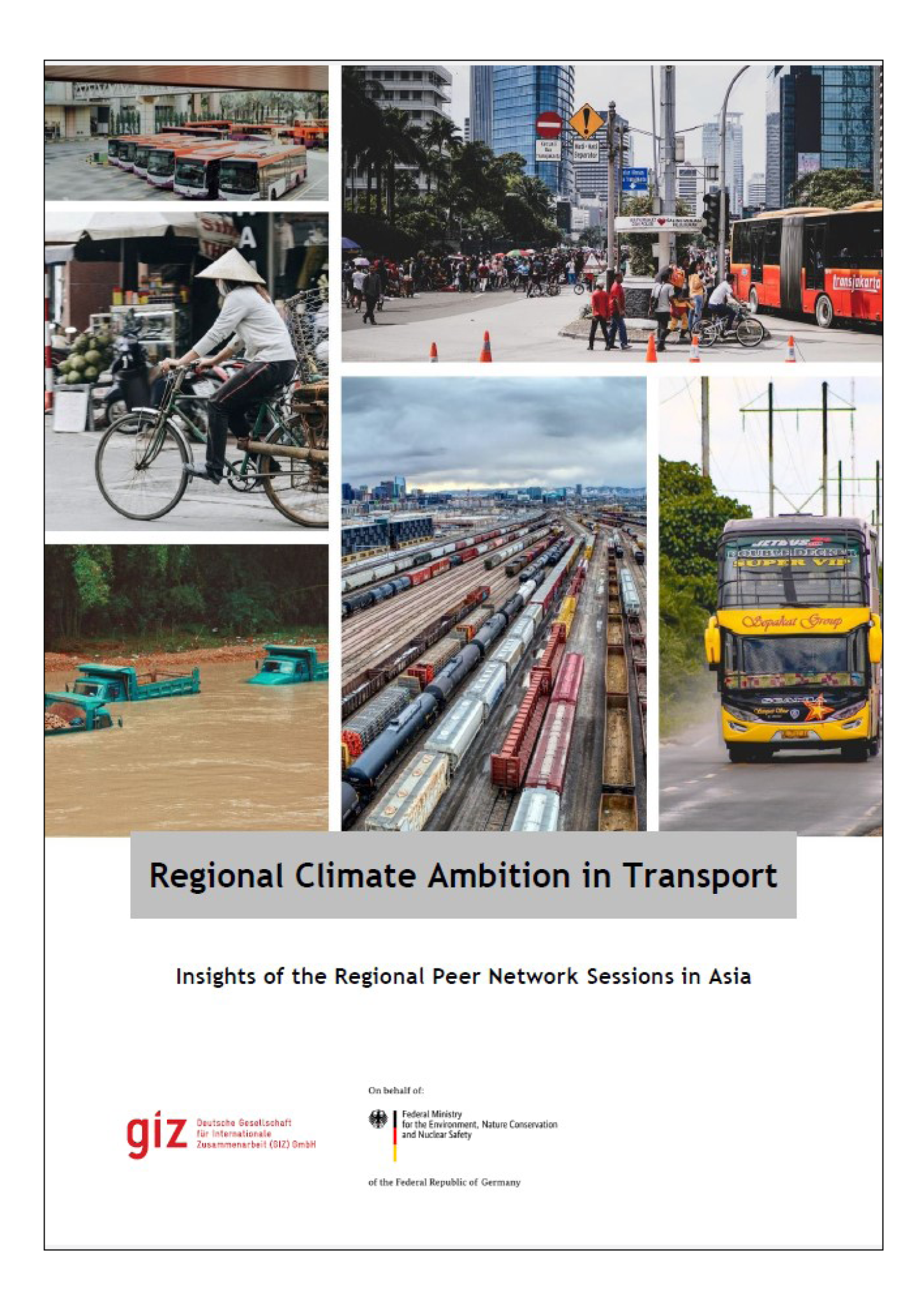
This paper provides an accumulation of insights of the GIZ’s Regional Peer Network sessions in the Asian region between May 2021 and January 2022.
This paper by ICCT focuses on national-level taxation and subsidy policies for passenger vehicles across 18 Asian and Asia-Pacific countries and compares the consumer ownership costs of a gasoline, a hybrid electric, and a battery electric vehicle in these countries over a 6-year ownership period.
The study focuses on EV charging infrastructure, related policy and regulatory measures, grid integration of EVs, and the way forward for smooth EV adaption in the Indian EV ecosystem. This specific report is the second in the series of four reports.
News & Events
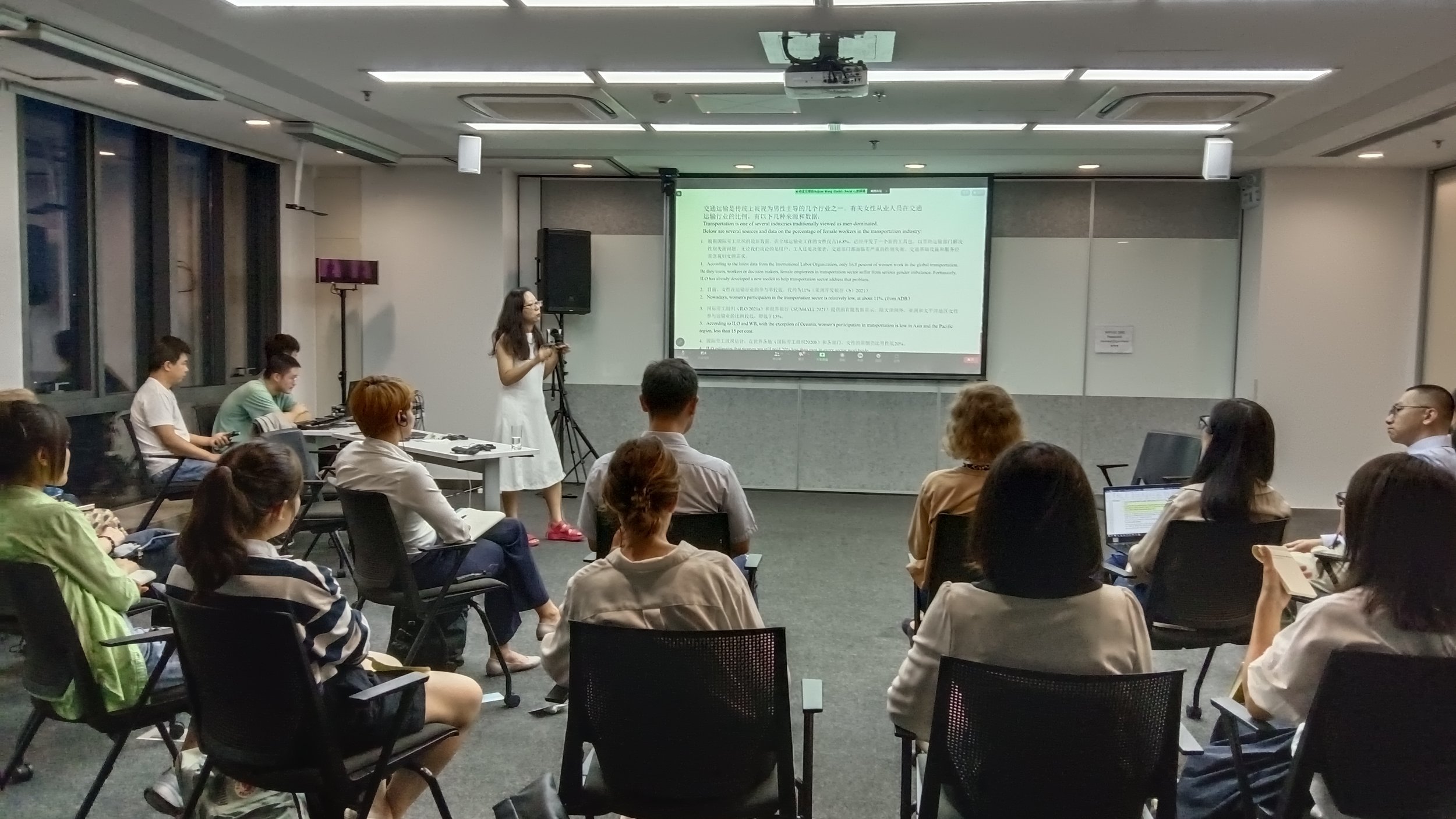
Women, making up just 17% of the transport workforce, face barriers that hinder their involvement. Despite flexible job benefits, gender biases and financial obstacles persist. Learn how new policies and support programs overcome these challenges and drive gender equity in transport.
Follow this page for daily updates from “Low-Carbon Prosperity in Progress: Transforming Transport in Asia", the regional conference of the NDC Transport Initiative for Asia (NDC TIA), in Bangkok, Thailand between 25 and 28 June, 2024.
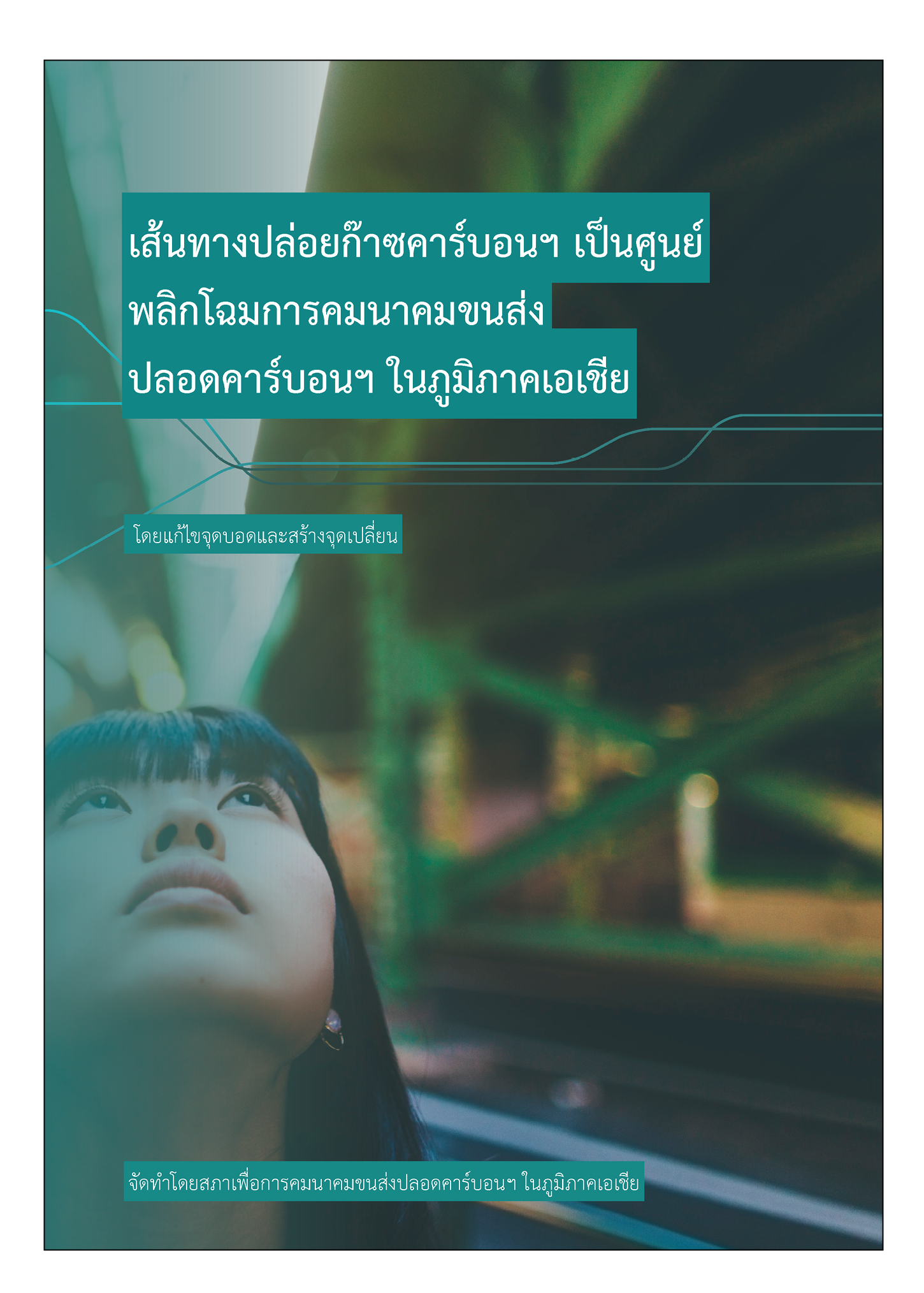
The Thai version of the Council Report “The Path to Zero – A Vision for Decarbonised Transport in Asia” is now available!
On August 1, 2023, the NDC Transport Initiative for Asia’s (NDC-TIA) China Component project invited experts and practitioners from the fields of low-carbon development and sociology for a joint discussion.
In June 2024, "Low-Carbon Prosperity in Progress: Transforming Transport in Asia", the regional conference of the NDC Transport Initiative for Asia (NDC TIA), will take place in Bangkok, Thailand.
It will address the urgent need for sustainable transport solutions in the region, aiming to achieve zero emissions by mid-century, with a focus on collaborative efforts and successes in decarbonising the transport sector across Asia, including China, India, Vietnam, and Thailand.
We are excited to announce that we will co-organise gender sessions at the Asia and the Pacific Transport Forum 2024, hosted by the Asian Development Bank (ADB) in Manila.
NDC-TIA will launch a signature report “Visioning to Implementation: National Transport Decarbonization Policies that Match Climate Targets in China, India and Vietnam” at the NDC Partnership Pavilion on December 5th during COP28.
NDC-TIA will be presented at four different events at the Asia Pacific Climate Week (APCW) 2023 with partners including Asia LEDS Partnership, GIZ, ICLEI Asia, NREL , UNEP, UN ESCAP, UNFCCC-IGES, and WRI India.
Staff
Hannah is a Junior Specialist and responsible for event logistics and communications in the regional component of the NDC-TIA.
Anneli is an Advisor on Transport and Climate Change for the NDC-TIA project, supporting the global management as well as the India component.
Johannes contributes to the policy, research and event work of Agora Verkehrswende as part of the NDC-TIA project.
Elisabeth is the Project Lead for Agora Verkehrswende’s contribution to the NDC-TIA project.
Rana supports the NDC-TIA project with high-level planning, strategy, and engagement.
Thomas provides operations support for the NDC-TIA project.
Stefanie provides administrative support for the NDC-TIA project.
Hong is a project manager and analyst for the NDC-TIA at REN21.
Jennifer is ICCT’s NDC-TIA grants lead.
Jennifer is ICCT’s NDC-TIA communications lead.
Zifei is ICCT’s NDC-TIA project manager on the Regional & Global Component work.
Daniel provides high-level strategy support to the regional component of the NDC-TIA project.
Urda is the director of the NDC-TIA coordinating the initiative’s work across all components.
Kirsten is policy advisor and has a strong background on MRV and climate policies/NDCs.
Marica supports the NDC-TIA project in the areas of event organisation and communication.
Christian will support the NDC-TIA project in the areas of outreach, communication and exchange with high-level stakeholders.
Philipp is responsible for communication and outreach activities in the NDC-TIA project.
Borana Resulaj supports the NDC-TIA project with finance and grants management.
Yiqian oversees WRI’s NDC-TIA Regional and Vietnam component work.
Steph is WRI’s NDC-TIA project manager.
Zé coordinates NDC-TIA’s global/regional communications and outreach package, as well as the Vietnam component’s research.
Maruxa supports the NDC-TIA project with high-level planning, strategy and engagement.
Angel is SLOCAT’s NDC-TIA project manager. Angel is the officer of Analysis at the SLOCAT Partnership. She is based in Los Angeles, California.
Chris supports the NDC-TIA project with advocacy and engagement at the regional and global levels. Chris is the Director of Global Advocacy and Engagement of SLOCAT. He is based in New York City.
Nikola supports knowledge, policy analysis, and data analysis for the NDC-TIA project.
Alice leads SLOCAT Partnership’s strategic communication for the NDC-TIA project.