
India
Developing regulatory frameworks and strengthening policies to support electric vehicle deployment
For India to meet its long-term energy security, climate change and electrification goals, coordination and motivation among various ministries and departments will be crucial.
The regular revision cycle of the NDCs offers the opportunity to bring together private and public stakeholders (led by NITI Aayog) to jointly discuss and agree on ways forward to decarbonize the sector. This program supports the development of a stakeholder platform with the capacity to formulate pathways on decarbonizing transport in India and technical assistance to improve policy and procurement frameworks for EVs and charging infrastructure.
Strategic Partner

NITI Aayog (National Institution for Transforming India)
Key Outputs
Output 1

Develop a stakeholder platform that can formulate pathways to decarbonize transport in India through technical assistance.
Output 2

Develop policy and procurement frameworks for electric vehicles and charging infrastructure.
Learn more about India’s ambitions to decarbonize its transport sector

Research
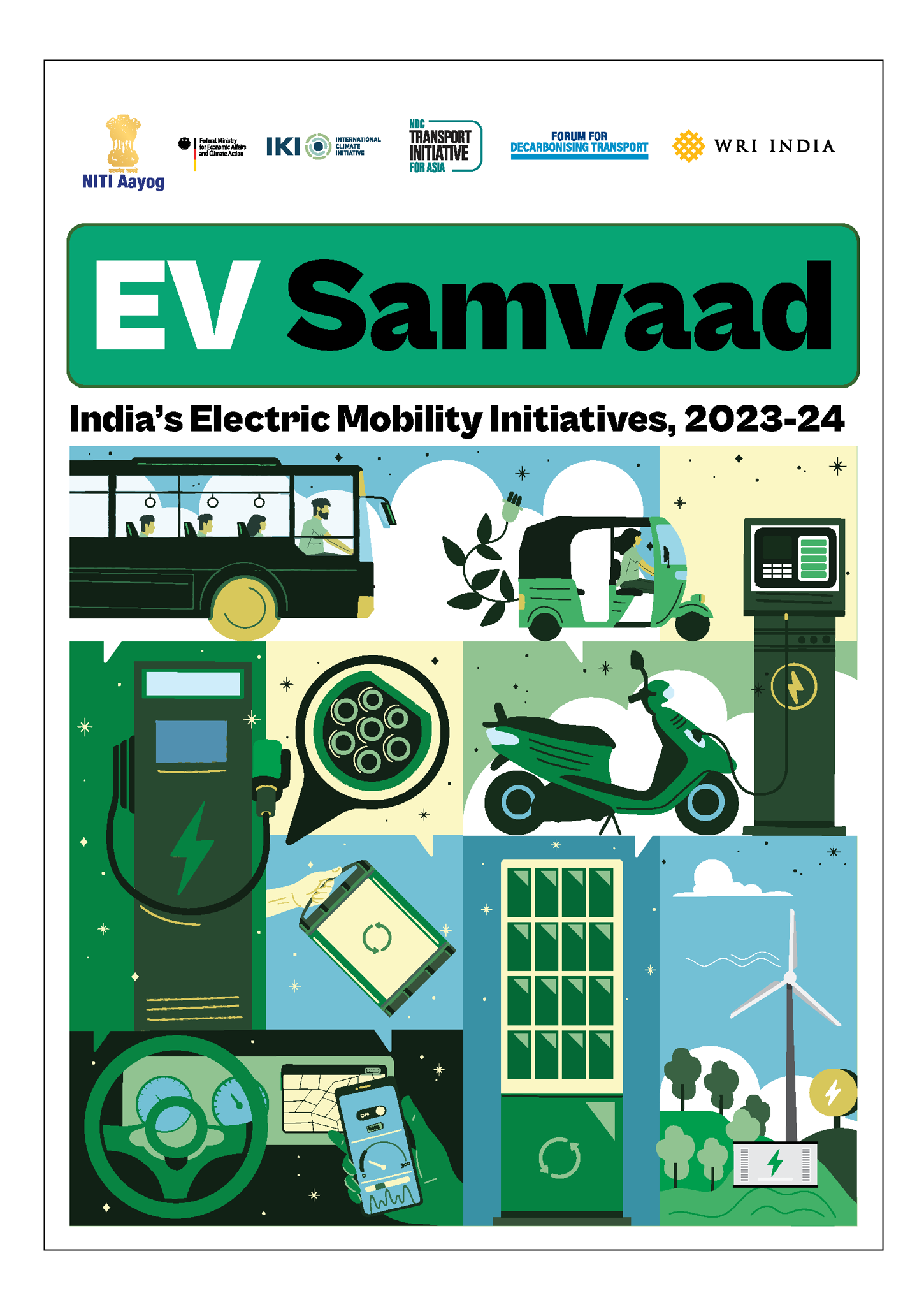
EV Samvaad is a compendium of electric mobility initiatives in India, covering the period from April 2023 to March 2024. It aims to monitor India’s electric vehicle (EV) landscape and decode policy interventions, implementation roadmaps, and industry-wide adoption plans.
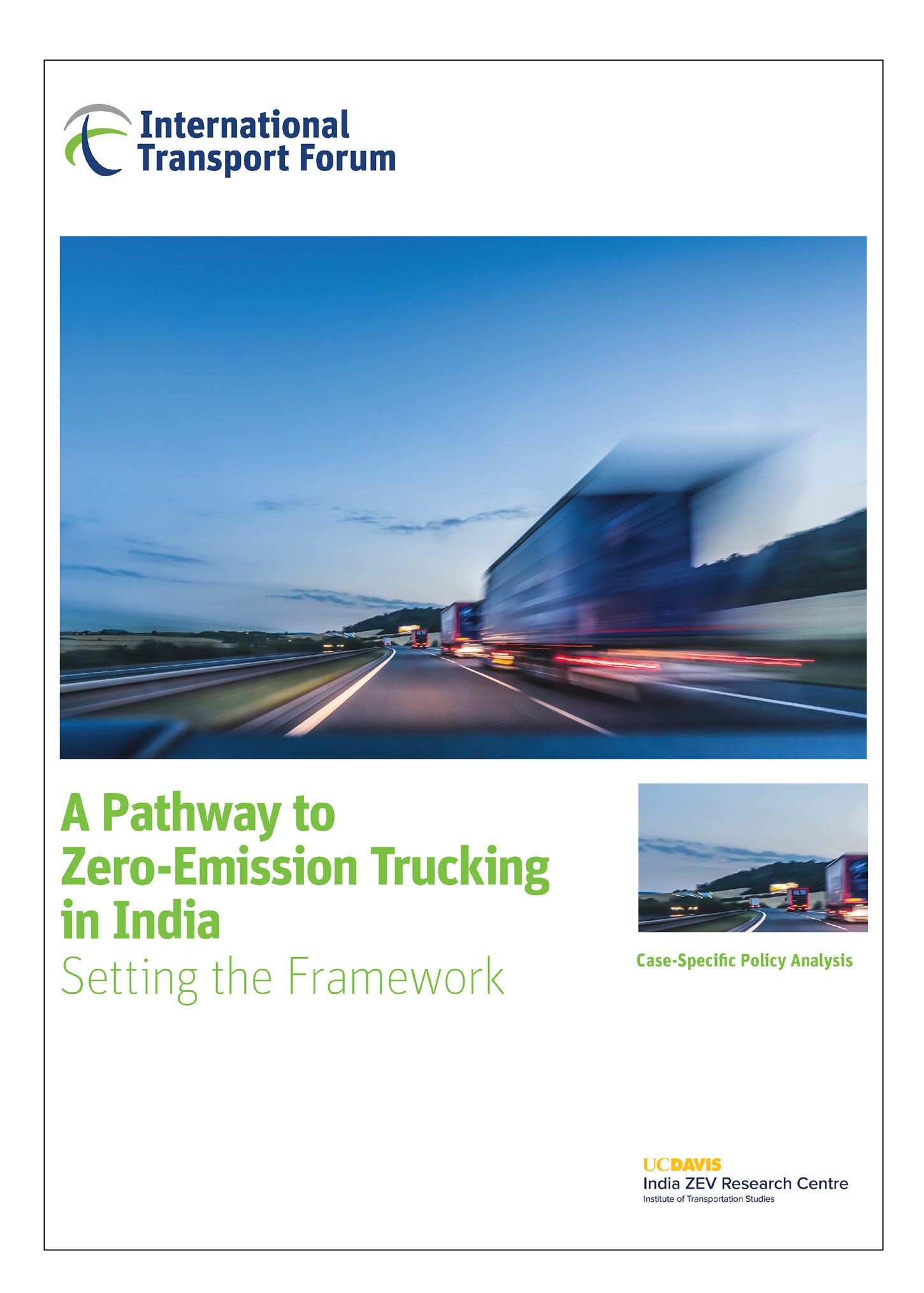
This report assesses the potential of decarbonising heavy-duty trucks in India with zero-emission technologies, focusing on battery-electric technology. It presents a four-pillared roadmap for a transition to zero-emission trucks that addresses technology, infrastructure and operations, financing, and policy interventions for India.
This report sets the context of renewables (RE)—based EV charging, its need in India, concerned stakeholders, modes of RE procurement, and locations for RE-based EV charging in different businesses.
This new report assesses how China, India and Vietnam are translating their international climate ambition into national climate change-related transport strategies and policies.
This paper explores the role which women and gender-specific mobility behaviour play in the decarbonisation of the transport sector in Asia, based on a comparative analysis of inclusive low-carbon transport, related challenges and gender-integrative solutions in China, India and Vietnam.
The report is the first comprehensive, India-specific analysis of urban passenger transport using a life-cycle perspective.
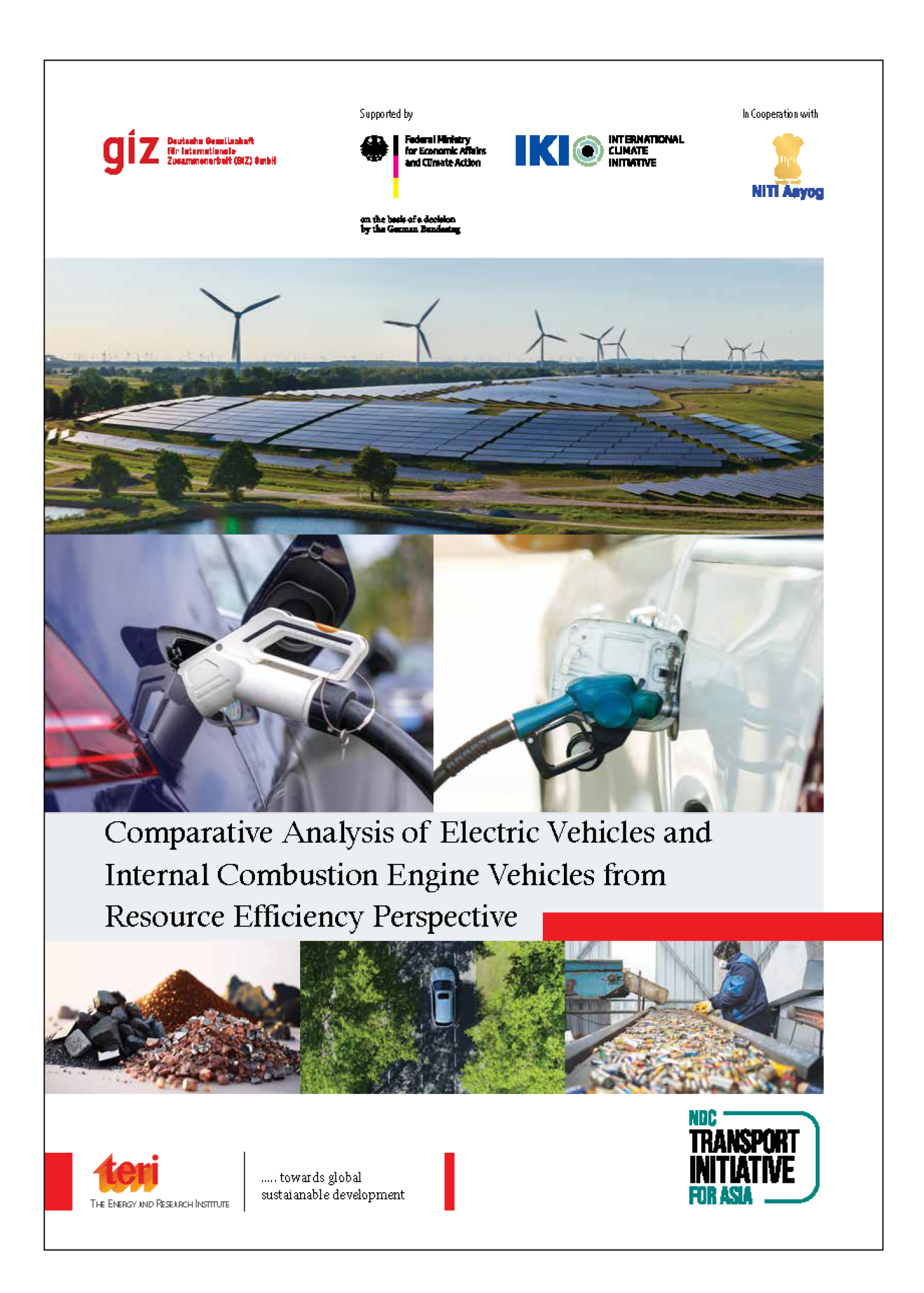
This research publication conducts a detailed comparative analysis to assess various environmental performance of EV’s and ICEV’s (petrol, diesel and CNG) in the 3-Wheeler and 4-Wheeler vehicle segment across its entire life cycle. The study has been analysed using India-specific conditions.
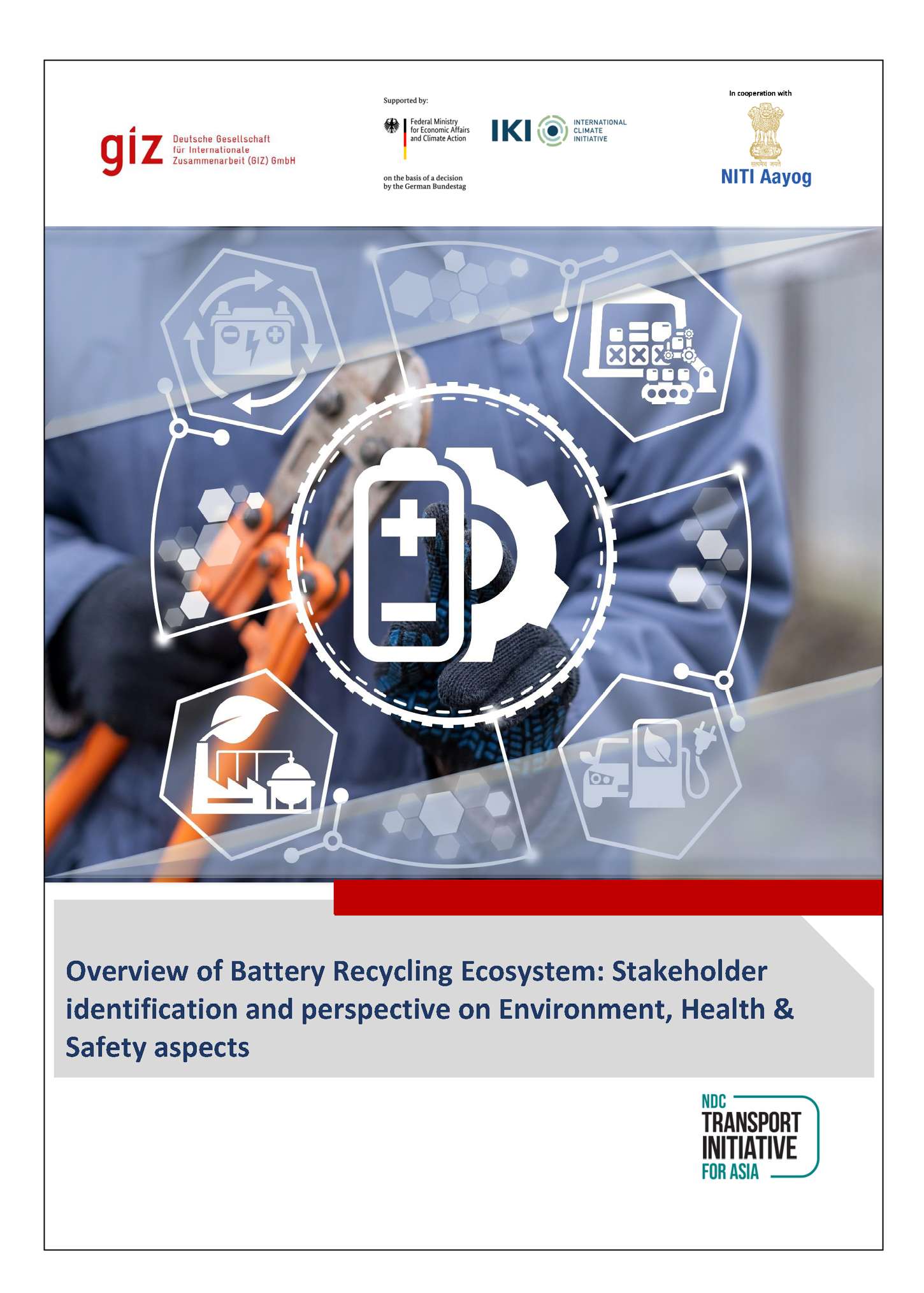
The report serves as a guiding document for the new entities in the battery recycling ecosystem, identifying various stakeholders and their corresponding roles and responsibilities. For these stakeholders, the report discusses permissions required for setting up battery recycling/refurbishing facilities, risks and corresponding mitigation measures, and standard operating procedures for safe handling of batteries.
The publication reflects the recommendations shared by stakeholders for scaling up the adoption of electric buses in India. The panel discussions explored viable financing pathways for the procurement of e-buses in India.
The Microsoft-Excel-based tool ‘Financial Analysis of Charging station (FACt)’ has been developed to help build an understanding of the business case for rolling out public charging infrastructure for electric vehicles (EVs) in the Indian context. It is a flexible, transparent, and user-friendly solution to the problem of conducting a quick preliminary assessment of the financial justification for setting up a public charging station.
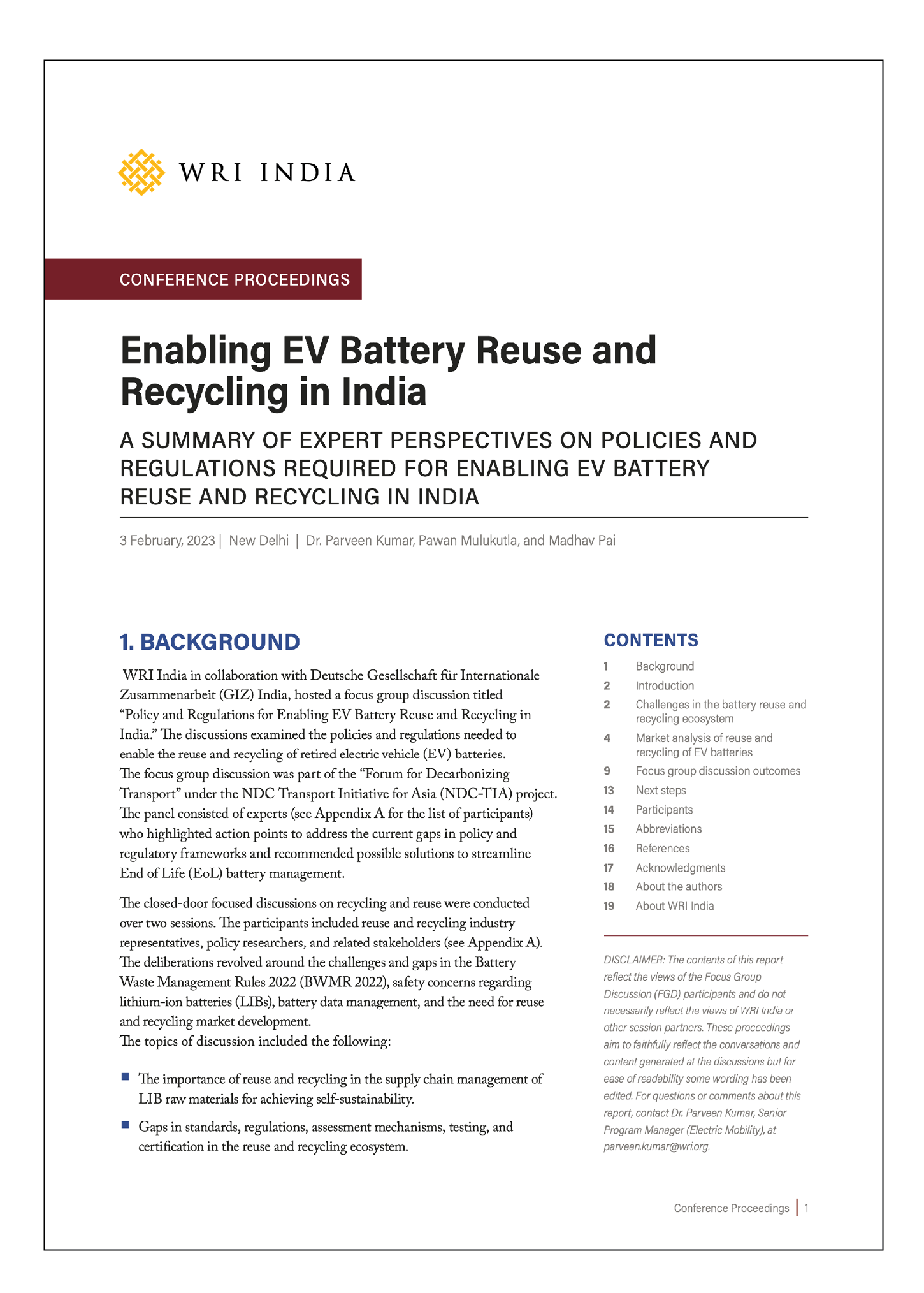
The conference proceeding includes recommendations from subject experts on the Battery Waste Management Rules 2022 and possible solutions to streamline End of Life (EoL) battery management. It also highlights the safety concerns regarding lithium-ion batteries and battery data management.
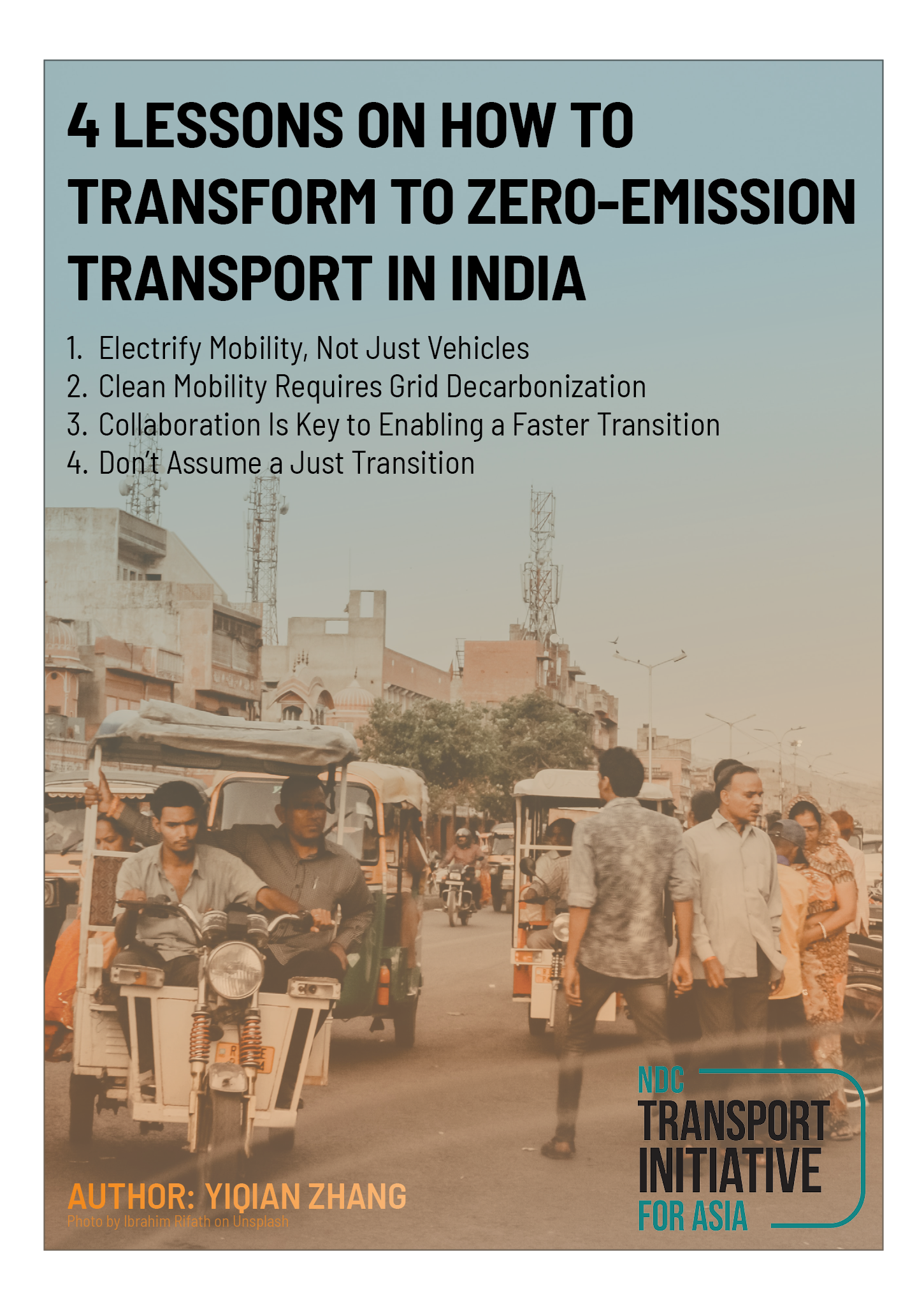
Based on interviews with NDC-TIA partners and other organizations working in India, this blog highlights the four lessons on accelerate the transition to zero-emission transport in India.
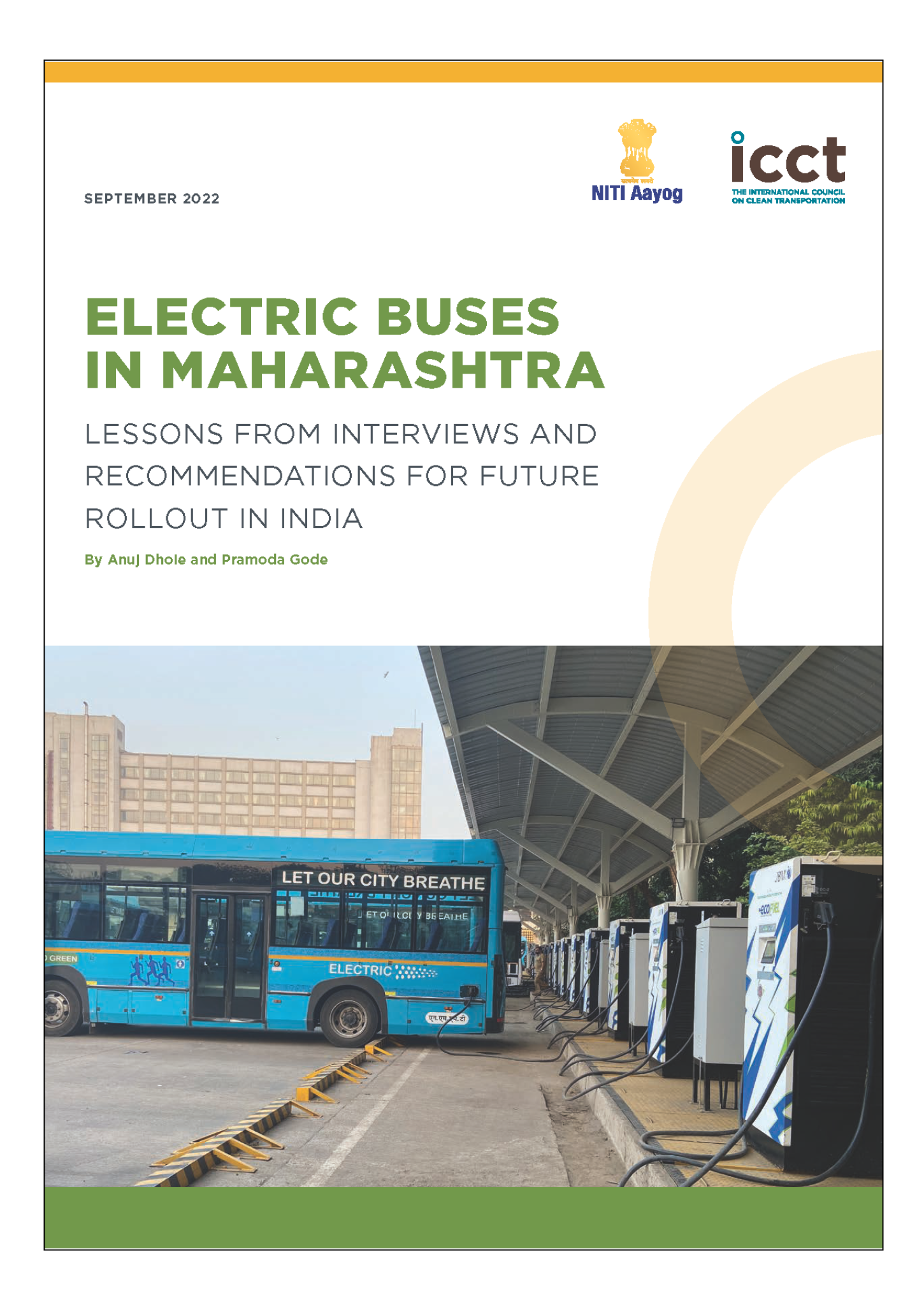
With information from interviews with 21 representatives from transit authorities and private bus operators, this report identifies key experiences and lessons from the electric bus rollouts in Mumbai, Pune, and Navi Mumbai and make specific recommendations based on international best practices.
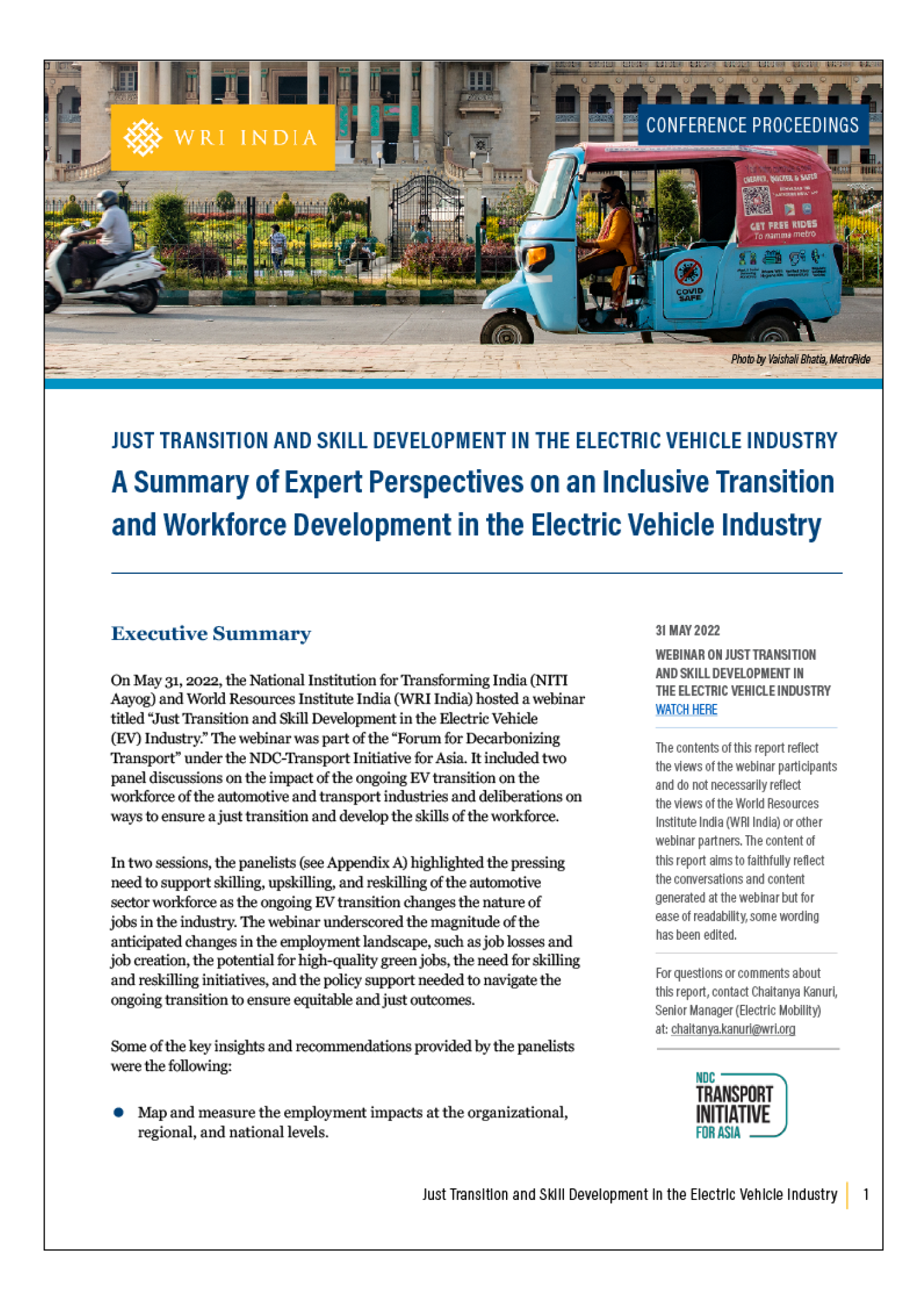
The conference proceeding document reflects the views of the stakeholders (public and private) on the impact of the ongoing EV transition on the workforce of the automotive and transport industries and ways to ensure a just transition. The ‘Just Transition’ conference is hosted under the Forum for Decarbonising Transport.
This specific report is the third report in a series and it focuses on detailed documentation and analysis of EV charging infrastructure and its grid integration in Indian EV ecosystem.
This report investigates the complete value chain of motive/traction batteries used in electric vehicle applications.
This study focuses on the recycling ecosystem of batteries, conducting international review of Germany and rest of EU, California (US), China, Japan and South Africa.
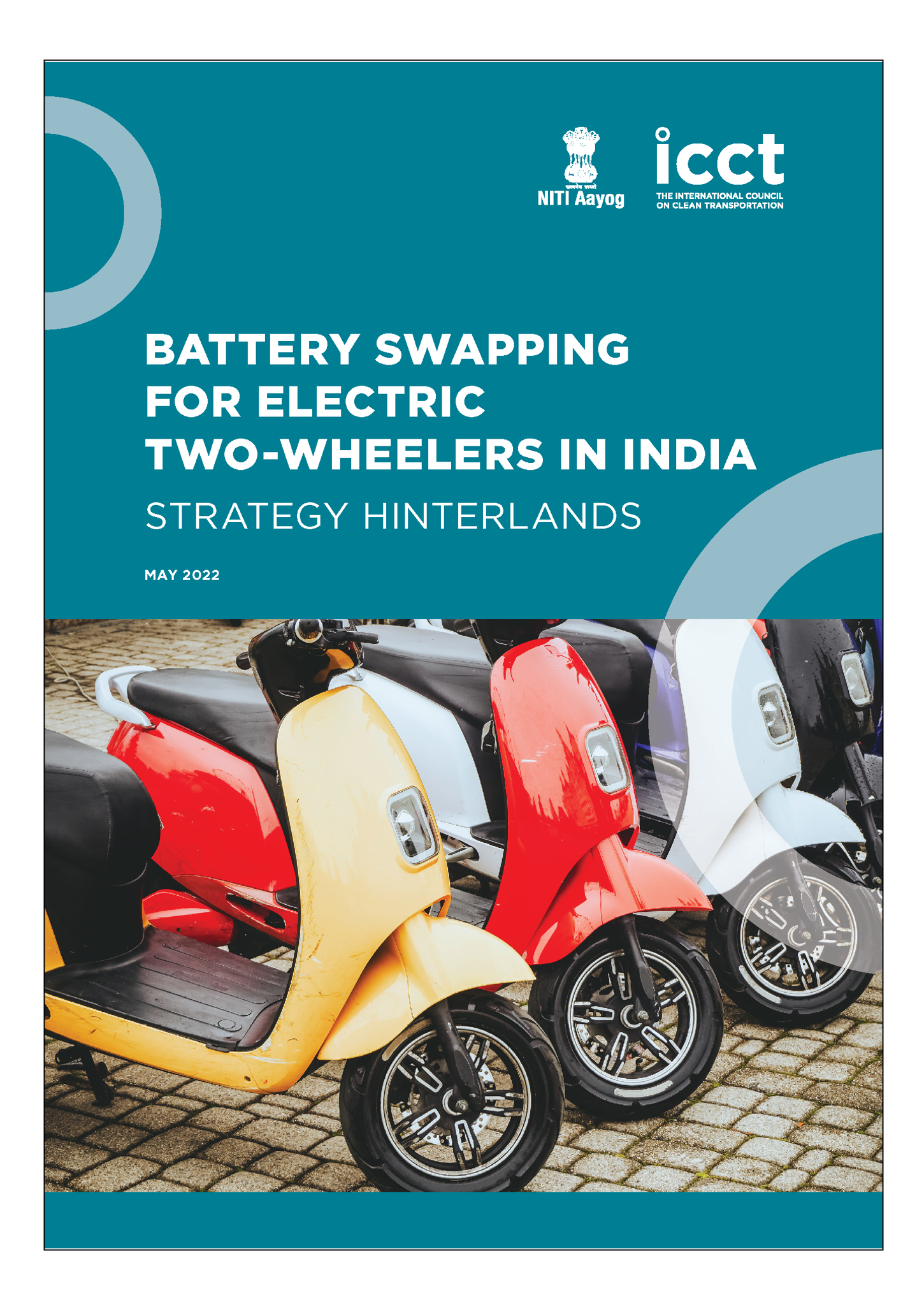
The report on “Battery Swapping for Electric Two-Wheelers in India – Strategy Hinterlands” identifies solutions to battery swapping application on two-wheelers to aid in India’s EV transition.
This paper compares key assumptions, energy use, and CO2 emissions by vehicle and fuel type across eight road transport energy and emissions models for India.
World Resources Institute India (WRI India) hosted a webinar on ‘Safety Readiness of Electric Vehicle (EV) Batteries in India’ to raise awareness regarding the safety challenges of EV batteries and solutions to overcome them. This document highlights the insights shared by the panelists on the current safety concerns and the way forward for a safer EV battery ecosystem in India.
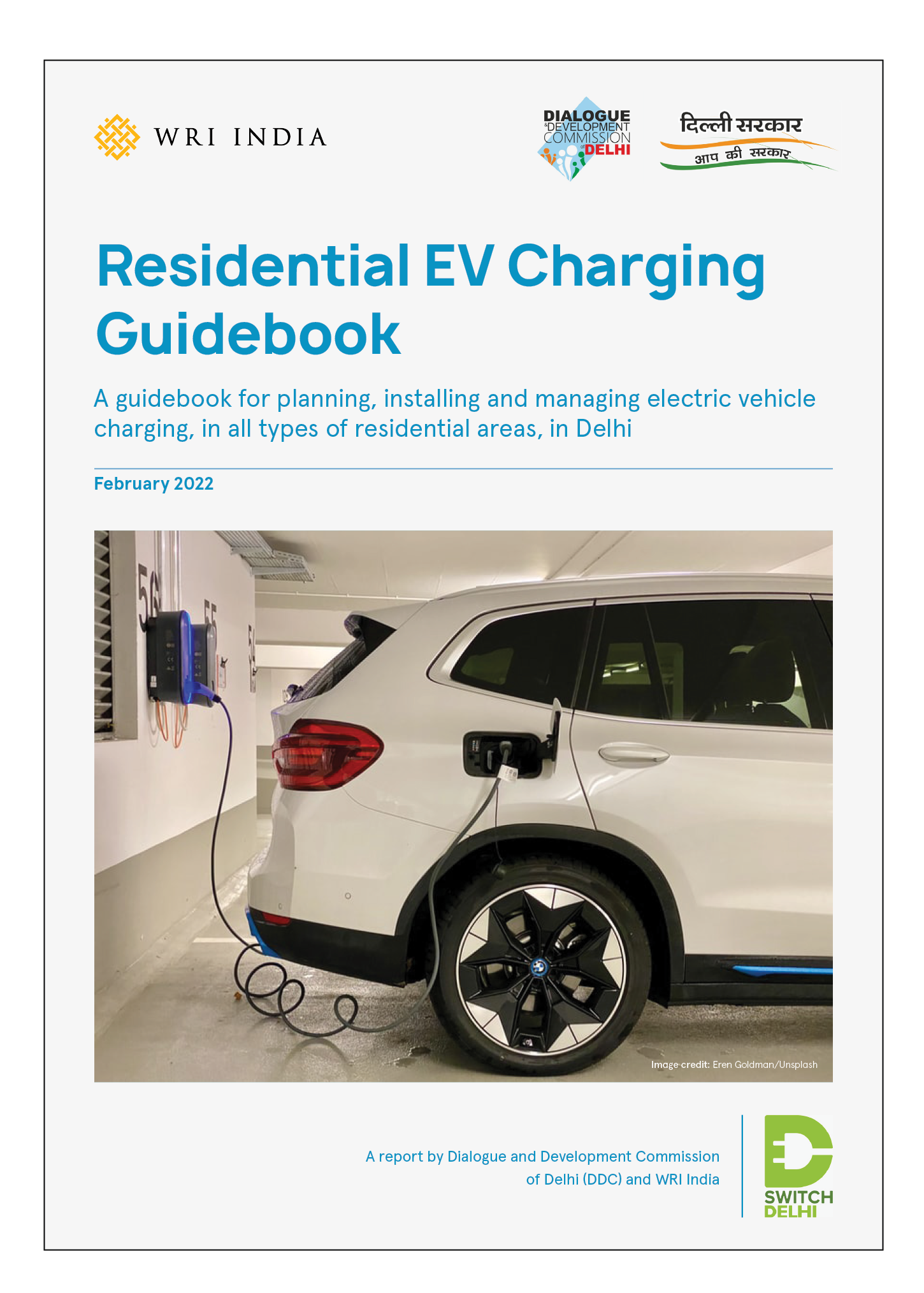
The Residential EV Charging Guidebook seeks to encourage all residential societies based out of Delhi to understand the importance of EV charging, support effective decision-making and set out the way forward for the planning and implementation of EV charging stations in the parking space of the societies.
The EV charging guidebook for shopping malls provides step-to-step guidance to mall owners on planning, installing, and managing electric vehicle charging at shopping mall(s) in Delhi.
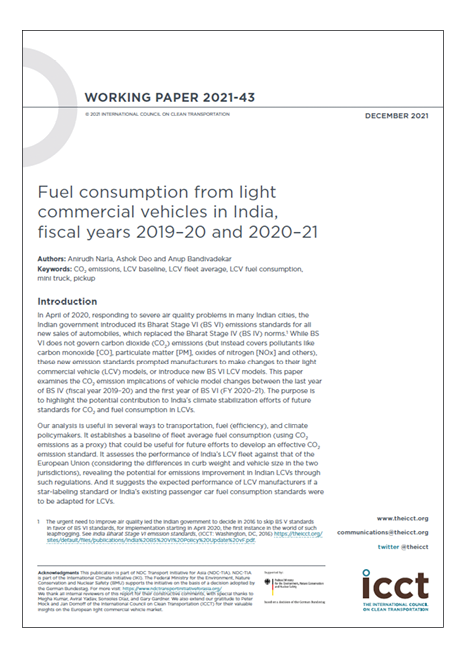
This paper is a continuation of the series of working papers on the Indian LCV market, dating back to 2016. it focuses on the N1 (load-carrying LCVs) category of vehicles, which consists of mini trucks and pickups. It includes a brief comparison with the performance of the M1 (passenger cars) category of vehicles
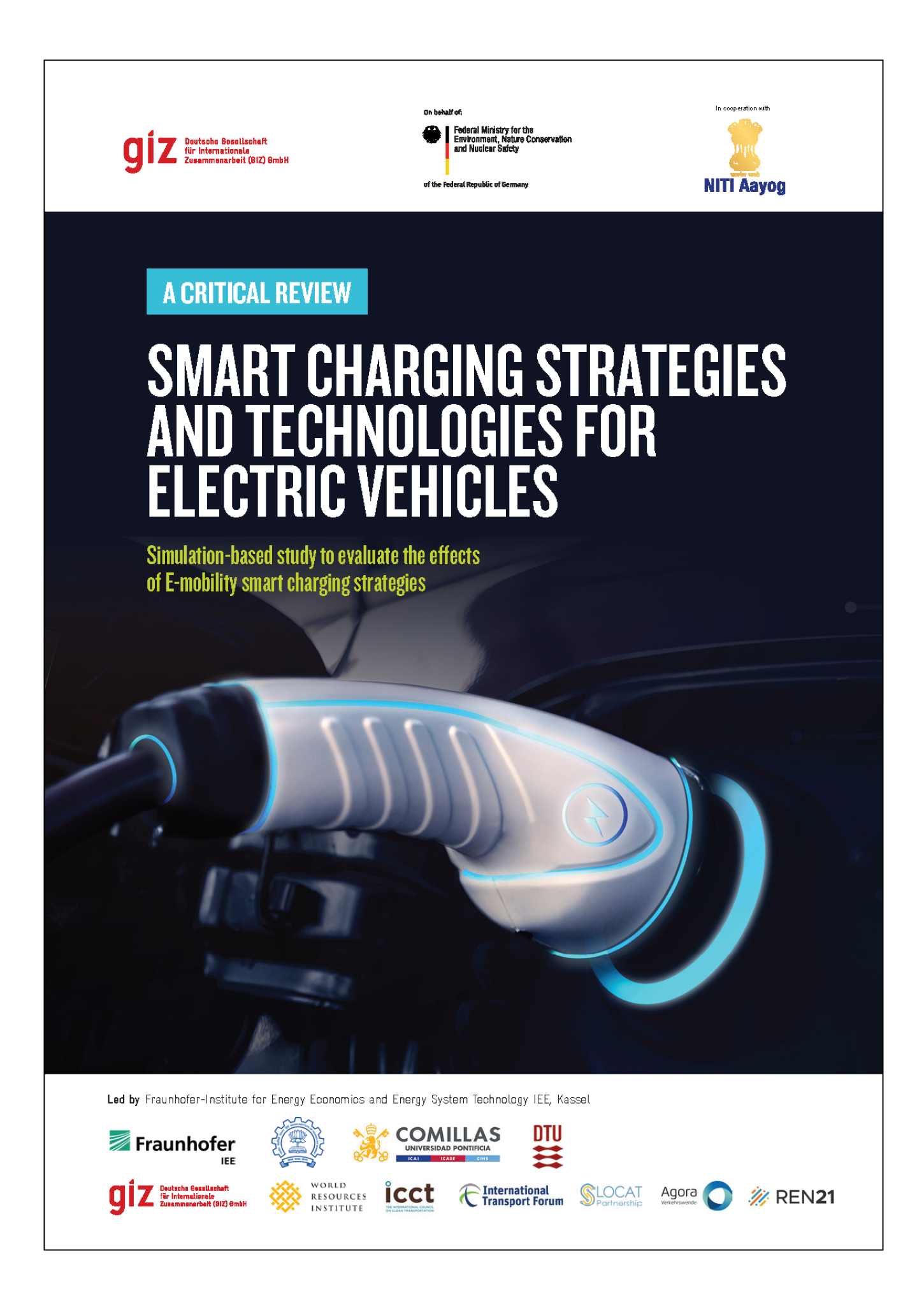
This GIZ India-led report focuses on Electric Vehicles (EV) smart charging strategies and approaches, related policy and regulatory measures, technical aspects, grid integration of EVs, and the way forward for smooth EV adaption in the Indian EV ecosystem.
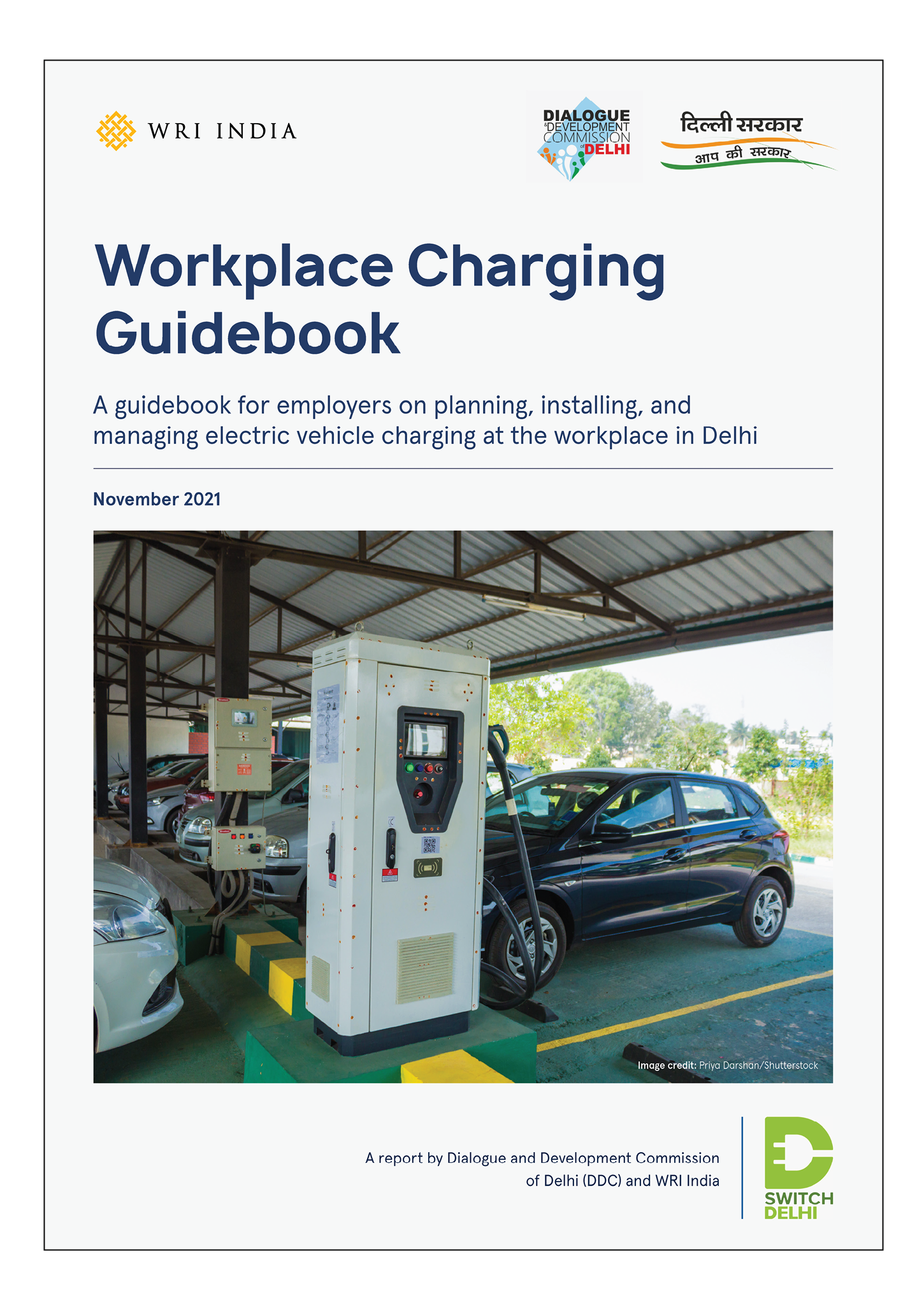
The Workplace EV Charging Guidebook provides step-wise guidance for employers on planning, installing, and managing electric vehicle charging at their workplace in Delhi.
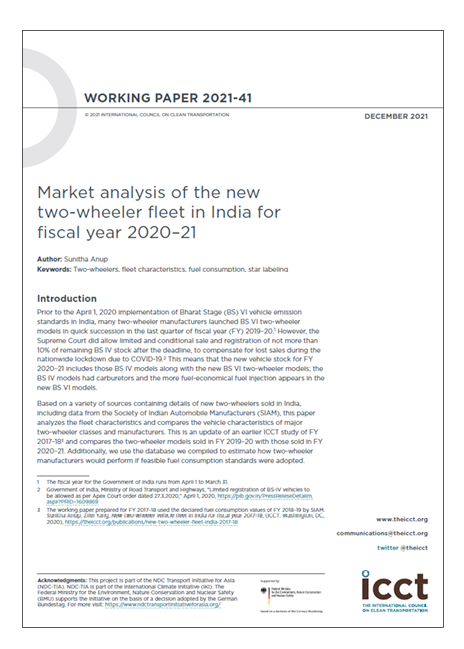
This study analyzes fleet characteristics and compares the vehicle characteristics of major manufacturers and classes of new two-wheelers sold in India for the fiscal year 2020-2021.
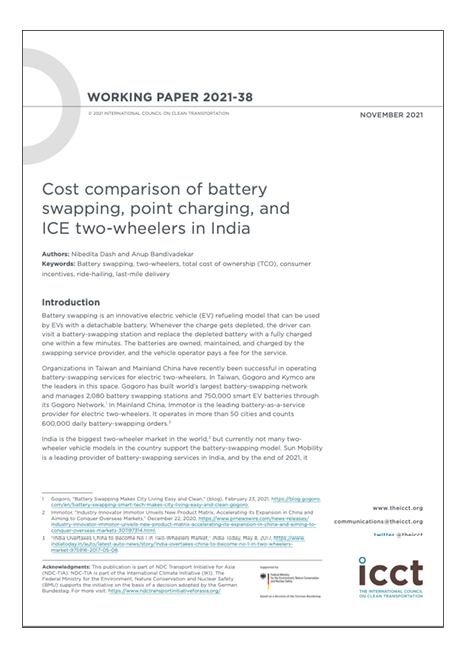
Battery swapping is an innovative electric vehicle refueling model that can be used by vehicles with a detachable battery. This paper evaluates if electric two-wheelers in India with the battery-swapping option have achieved cost parity relative to electric two-wheelers with the point charging option and with conventional gasoline two-wheelers. The results in this working paper show that for all three use cases considered, the electric two-wheelers with point-charging and battery-swapping options are considerably cheaper than the gasoline two-wheeler.
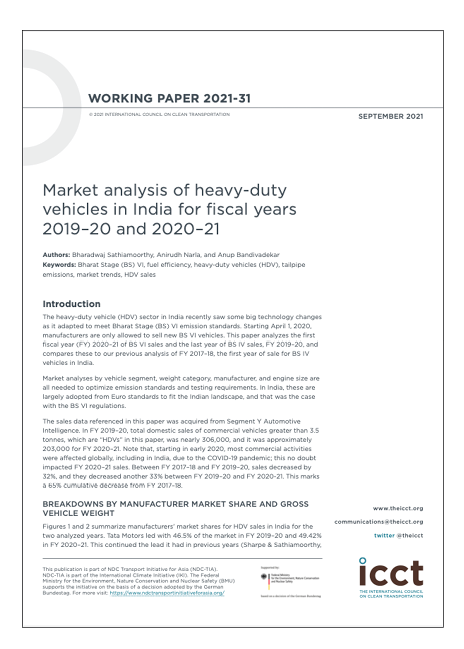
Market analyses by vehicle segment, weight category, manufacturer, and engine size are needed to optimize vehicle emission standards and testing requirements. In India, these are largely adopted from Euro standards to fit the Indian landscape, and that was the case with the Bharat Stage (BS) VI regulations that took effect April 1, 2020. The heavy-duty vehicle market saw some big technology changes to meet the new standards, and this paper analyzes the first fiscal year (FY) 2020–21 of BS VI vehicle sales and the last year of sales under the previous BS IV standard, FY 2019–20.
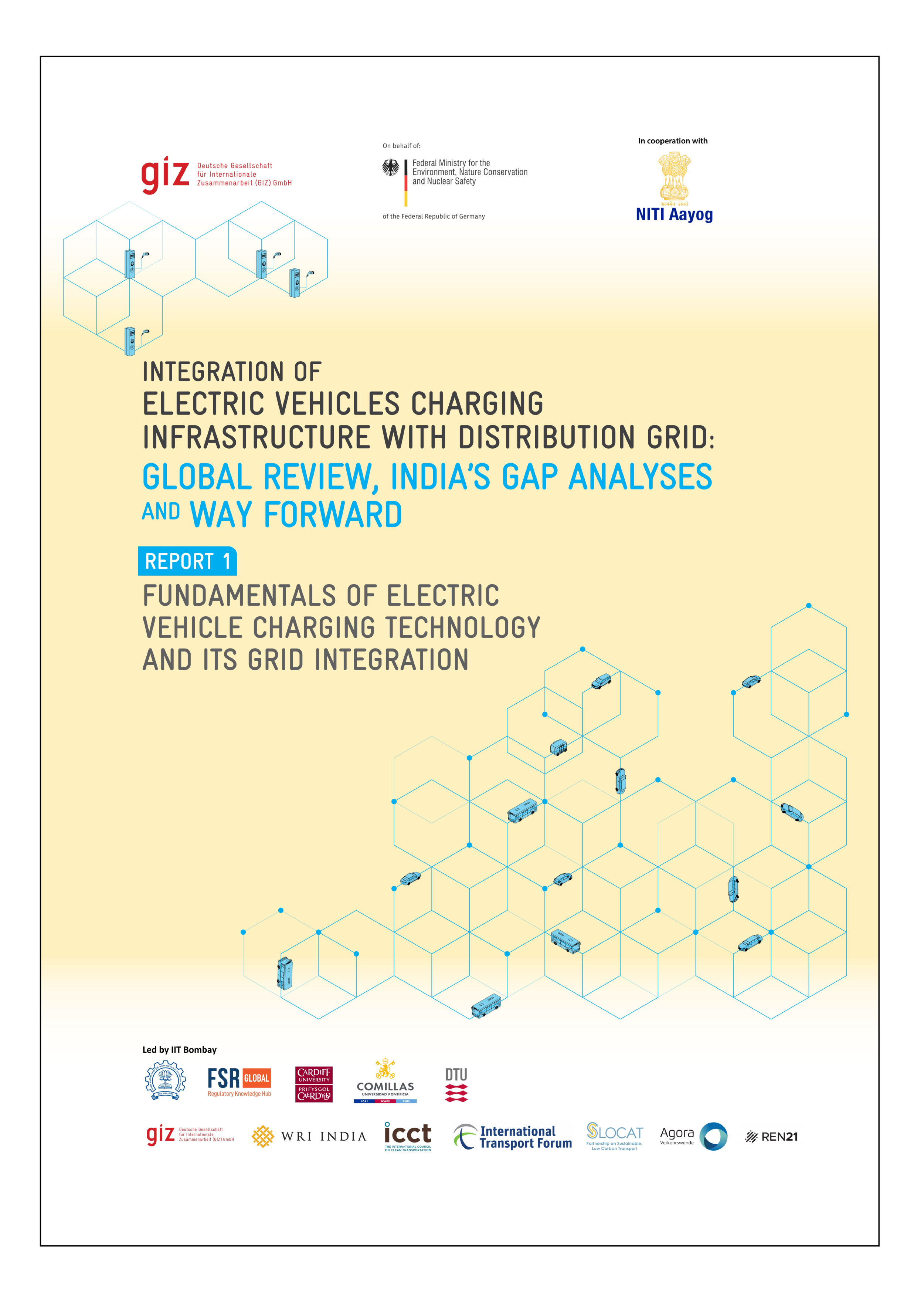
The study focuses on EV charging infrastructure, related policy and regulatory measures, grid integration of EVs, and the way forward for smooth EV adaption in the Indian EV ecosystem. This specific report is the first in the series of four reports documenting the fundamentals of EV charging technology, standards, communication protocols, and grid integration of EVs with the distribution system.

The study focuses on EV charging infrastructure, related policy and regulatory measures, grid integration of EVs, and the way forward for smooth EV adaption in the Indian EV ecosystem. This specific report is the second in the series of four reports.
News & Events
Follow this page for daily updates from “Low-Carbon Prosperity in Progress: Transforming Transport in Asia", the regional conference of the NDC Transport Initiative for Asia (NDC TIA), in Bangkok, Thailand between 25 and 28 June, 2024.

On 29 March 2024, GIZ and Deloitte in cooperation with NITI Aayog, released the report from the study “Power Market Reforms to Facilitate Renewable Energy-Based Electric Vehicle Charging in India”. The report “Recommendations to Enable Renewable Energy Based EV Charging in India” was released by Mr. Sudhendu Jyothi Sinha, Advisor, Infrastructure Connectivity vertical, NITI Aayog, Government of India and he delivered the keynote address.

On 4th March 2024, WRI India organized ‘Uddeshya: Towards Gender Responsive Urban Mobility Systems’ to deliberate on integrating gender perspectives to drive sustainable changes in transport.

On 16 November 2023, WRI India co-organized a session at the Asia-Pacific Climate Week to explore the policy frameworks and financing instruments for low-carbon pathways.

Bringing together national and subnational policymakers and industry leaders, the session, 'Towards Low-Carbon Pathways for India's Mobility,' of CXO Conclave at the 3rd E-Mobility India Forum, was hosted by the NDC-Transport Initiative for Asia (NDC-TIA) as part of the Forum for Decarbonizing Transport on August 18, 2023.
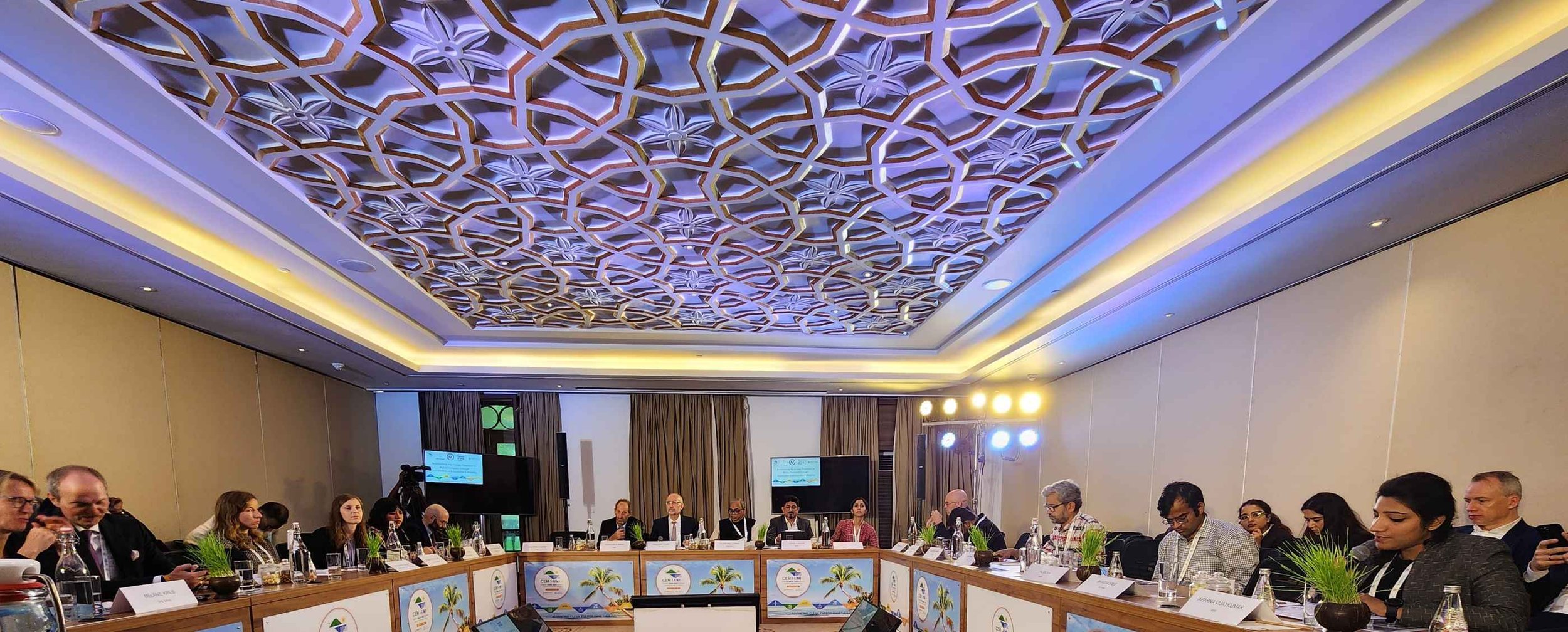
The CEM14 side event focused on bringing together government representatives and practitioners from across the NDC-TIA and Leadership Group for Clean Transport in Asia (LG-CTA) network to exchange their experiences and lessons learnt from the development of the transport decarbonization pathways and strategies in Asian countries.

WRI India organized an one-day conference, Uddheshya, on 22nd March 2023, with 80 gender experts, transport planners, researchers, practitioners, civil society representatives, and other stakeholders to discuss and deliberate on gender-inclusivity in transport and achieving equitable access to mobility and opportunities.
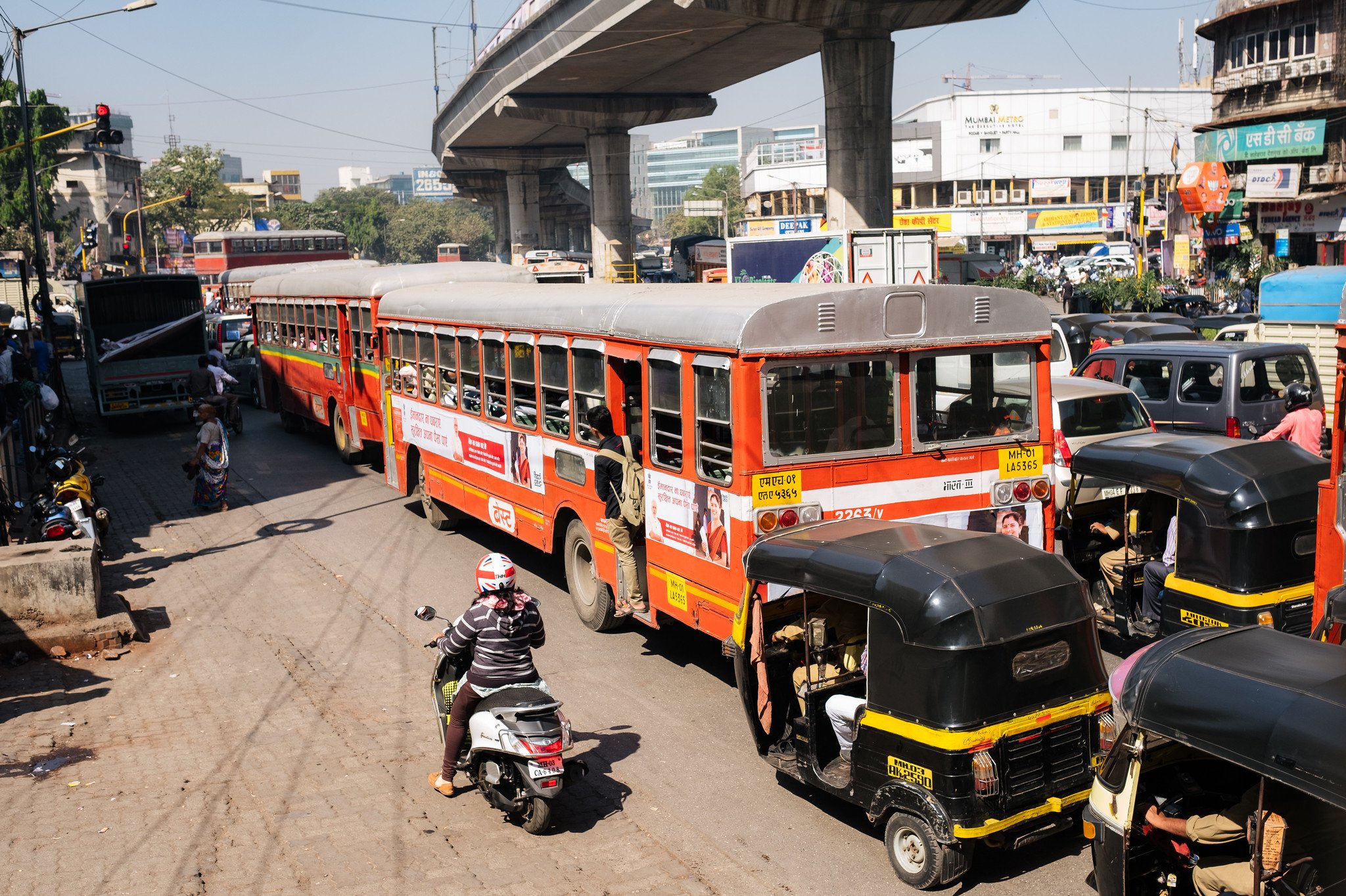
Building on the interviews with NDC-TIA partners and other organizations working in China, India, and Vietnam, this final blog highlights the key commonalities and lessons on accelerating zero-emission transport for similar countries in Asia.
Staff

Amegh is the team leader of NDC-TIA’s India component and program manager for electric mobility at GIZ India.

Anneli is an Advisor on Transport and Climate Change for the NDC-TIA project, supporting the global management as well as the India component.


Anuj is ICCT’s NDC-TIA consultant researcher on the India component.

Carl supports communication of the NDC-TIA project and assists in fulfilling other project needs.

Surag is NDC-TIA project’s India component project team member.

Kshitij is NDC-TIA project’s India component project team member.

Madhav is a Program Executive Director at WRI and supports the NDC-TIA project with high-level stakeholder engagement in the India Component.

Pawan is the Director of Clean Mobility and Energy Tech at WRI India. He is the overall lead for WRI India for the India component of the NDC-TIA project.

Chaitanya manages stakeholder engagement and day-to-day activities of WRI under the NDC-TIA in India.

Malithi is the project manager for NDC-TIA at the ITF. Malithi advises national governments and city authorities on climate impacts, accessibility and sustainable mobility.

Bhagyasree is NDC-TIA project’s India component project team member.

Toni works as a Junior Technical Expert in the NDC-TIA Project.

Vatsalya is a transport research officer at the ITF’s quantitative policy analysis and foresight team.

Elisabeth leads the policy analysis team at the International Transport Forum in Paris and supports the management of NDC-TIA’s India activities.

Nibedita is ICCT’s NDC-TIA consultant researcher.

Zhenying is ICCT’s NDC-TIA senior researcher.

Sahana L is a Junior Technical Expert for electric mobility under the NDC-TIA project’s India Component.

Garima is a Manager in Integrated Urban Transport Team of WRI India.

Amit Bhatt is ICCT's project manager for NDC-TIA's India Component work.

Nikita is WRI’s NDC-TIA (India Component) Senior Communication Associate.